

Tile, Song, River
Lisbon and Porto reflect two sides of Portugal , one shaped by light, hills, and maritime memory, the other by river, wine cellars, and quiet endurance — together revealing the country’s history through everyday life rather than spectacle.

Urban craft traditions from Lisbon to Porto
Portuguese cities wear their history visibly.
Lisbon's buildings are covered in azulejos, hand-painted ceramic tiles depicting everything from maritime scenes to floral patterns. Porto's riverfront still carries the silhouette of ‘rabelo’ boats, the flat-bottomed vessels that once moved Port wine downriver. And in Alfama, fado drifts out of narrow streets, carrying lyrics about saudade, a kind of longing English never quite holds.
This is not a preserved heritage. It is a living practice.
Tile painters still fire ceramics using techniques that have survived for centuries. Fado singers perform in rooms where their grandmothers sang. Craftspeople keep traditions alive through dictatorship, revolution, and the slow pull of modern life.
What follows is a closer look at the people and places that keep Portuguese urban culture intact, through craft disciplines that refuse to industrialise completely.
Tradition disguised as urbanism.
Azulejos: when architecture became canvas
Azulejos are everywhere, on facades, in churches, across metro stations.
Their ubiquity makes them easy to overlook until you understand what you are seeing.
The technique arrived via Moorish Spain in the fifteenth century, then evolved through Dutch influence in the seventeenth, when blue-and-white Delftware inspired Portuguese adaptations. Over time, Portugal made the form its own.
By the eighteenth century, azulejos had become something distinctive, panoramic scenes covering entire walls, narrative sequences depicting historical events, and geometric patterns designed to trick the eye.
What is remarkable is that production never fully industrialised.
Hand-painting persists because certain effects cannot be mechanised. Colour gradation. Fine detail. Custom commissions that need a human hand, tile by tile.
In working studios, you can still see the process end to end.
- Biscuit firing
- Glaze application
- Hand-painting
- Final firing that fixes colour permanently
Many painters work from pattern books accumulated over generations, designs their great-grandparents painted, modifications made by their parents, new motifs developed through contemporary commissions.
It is not museum preservation.
It is a living design tradition where old patterns and new work sit side by side.
In Lisbon, the National Tile Museum adds context. Housed in a former convent, it holds panels from the fifteenth century onwards, making the evolution visible. Once you have seen the history, contemporary tile work becomes easier to read.
You stop seeing decorations. You start seeing a language.
.avif)
Fado: when literature became music
Fado is difficult to explain without hearing it properly.
Musically, it is the Portuguese guitar, a twelve-string instrument distinct from the Spanish guitar, accompanying a voice that follows specific melodic structures. Lyrically, it circles saudade, longing, nostalgia, melancholy, a feeling that sits deep in Portuguese identity.
The genre emerged in Lisbon's Alfama district in the early nineteenth century, grew through working-class taverns, became internationally defined by singers like Amlia Rodrigues, and survived censorship under dictatorship.
Modern fado lives in tension.
It holds to tradition while absorbing contemporary themes. It keeps performance protocols while reaching new audiences.
The rules matter.
Silence during songs. Applause only at the end. Photography is discouraged because it breaks the atmosphere.
When you hear fado in a room that understands those rules, it stops being dinner music. It demands attention.
It rewards careful listening.
And sometimes it lands in the body before the mind has time to translate it.
Porto: where commerce became architecture
Porto's identity is inseparable from trade.
Port wine, of course, but also textiles, cork, and cod fishing. The city's architecture reflects that commercial history through buildings designed for storage, processing, and shipping.
The Ribeira district along the Douro has accumulated history.
Medieval foundations. Eighteenth-century facades. Nineteenth-century warehouses. Twentieth-century reuse.
Across the river in Vila Nova de Gaia, Port lodges sit like quiet fortresses.
These are not decorative buildings. They are functional architecture designed for temperature and humidity conditions that age Port properly. Thick stone walls and riverside position create a stability modern climate control struggles to imitate.
Inside, you begin to understand why Port is not just a product. It is a system.
Barrel selection. Blending decisions. Years assessed for structure and ageing potential.
Along the water, the rabelo boats remain as symbols, and a few still operate under people who understand traditional river navigation.
Seeing the Douro from that perspective changes the story.
You are no longer looking at a postcard.
You are watching an economy.
.avif)
Livraria Lello: when bookshops became destinations
Livraria Lello has become complicated.
Too famous. Too crowded. Paid entry, queues, the feeling of a place being consumed by its own image.
But dismissing it as a tourist trap misses what makes it culturally significant.
Built in 1906, it is Art Nouveau at its most elaborate, carved wood, stained glass, and a staircase that has been photographed a million times.
More importantly, it is still a functioning bookshop.
It still sells books in an environment designed to make reading feel important.
Seen at the right time, when the shop is quiet enough to behave like itself, it becomes less about the staircase and more about the idea.
That a city once built a temple for literature.
And kept it.
Lisbon's maritime identity, and the history it carries
Lisbon was an empire's capital.
The city's monuments and museums reflect the Age of Discovery, when Portuguese navigators reached India, Brazil, Japan, and built trade routes that reshaped global commerce.
This history is complicated.
Navigation enabled colonialism. Voyages carried violence, slavery, and extraction.
Understanding Lisbon means holding both realities, acknowledging achievement while recognising cost.
Belm concentrates the symbols.
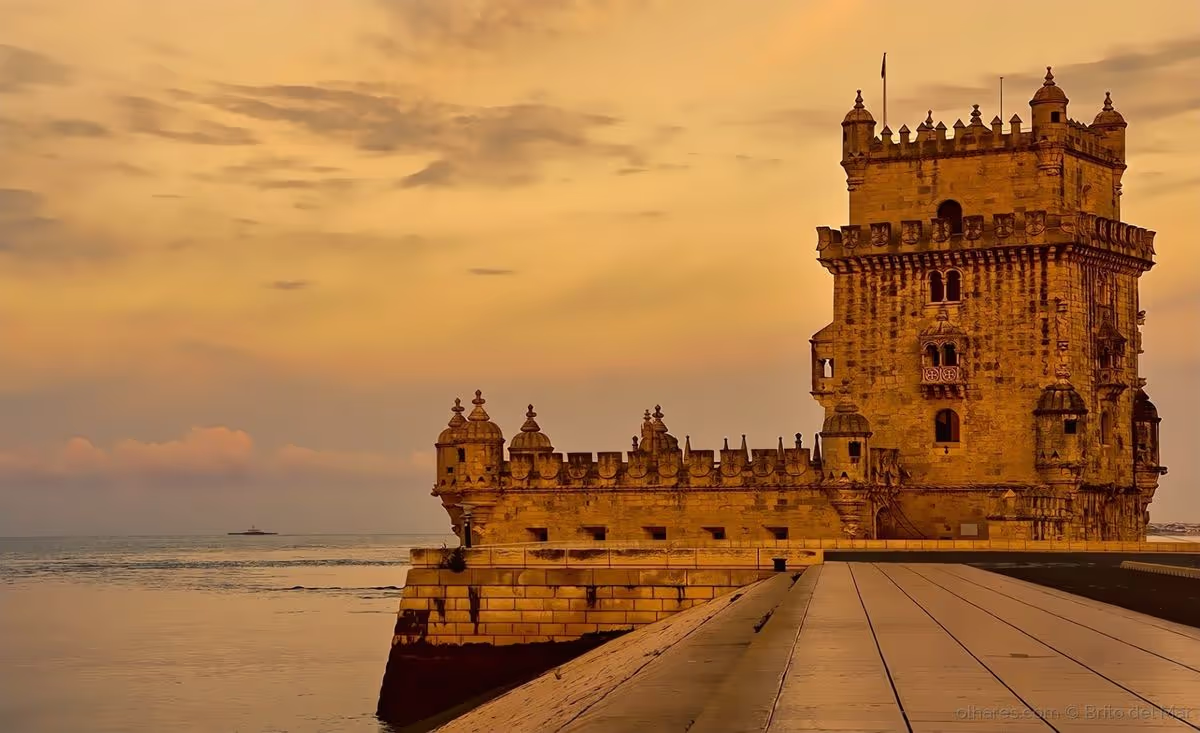
Jernimos Monastery, built with wealth tied to spice routes. The Tower of Belm, guarding the harbour. The Monument to the Discoveries, still controversial in what it chooses to celebrate.
The Maritime Museum adds technical context.
Navigation instruments. Ship models. Maps showing how coastlines were documented.
Once you understand the mechanics of sixteenth-century ocean travel, astronomical observation, dead reckoning, accumulated knowledge, the voyages become more comprehensible.
Not miracles.
Systems.
Sintra: royal escapism as architecture
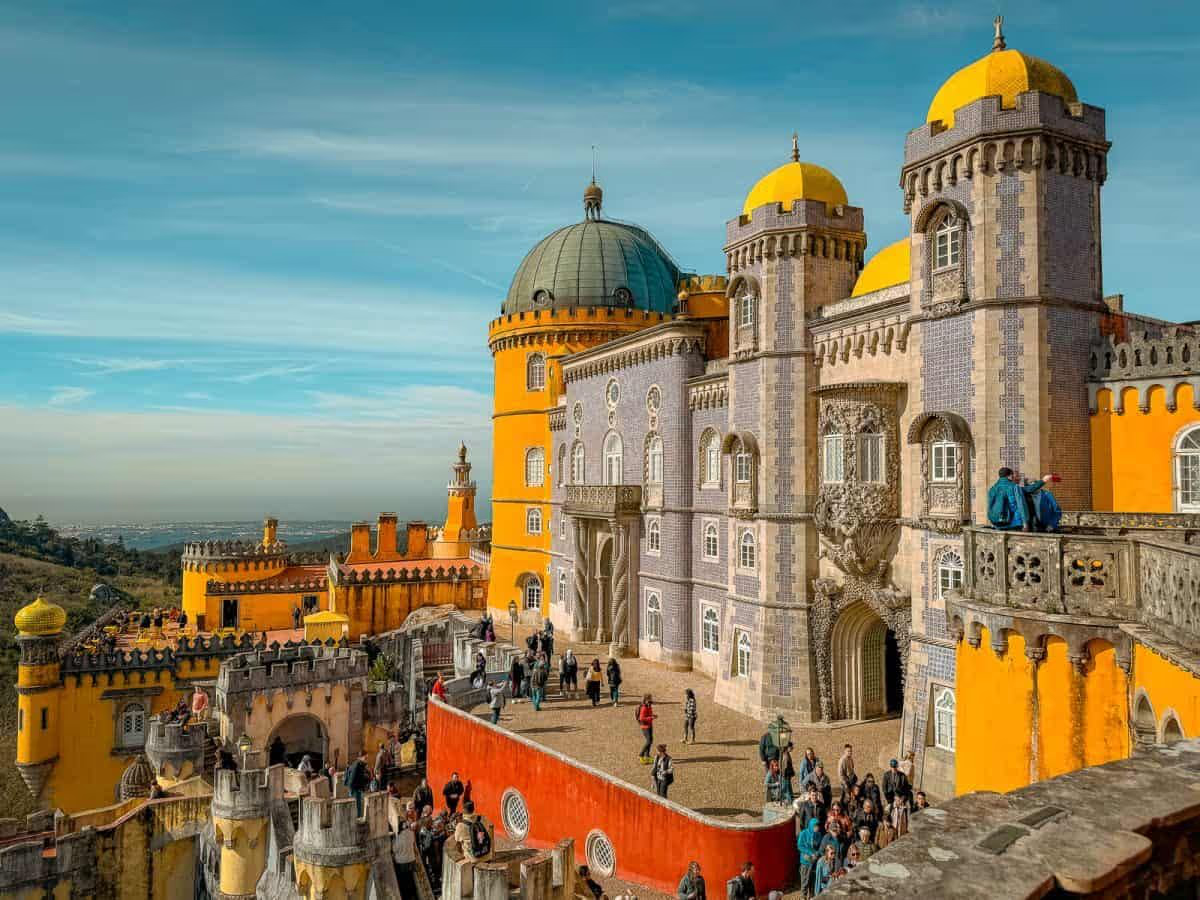
Sintra sits in the hills outside Lisbon, cooler, greener, and historically used as a summer retreat.
The result is architectural fantasy.
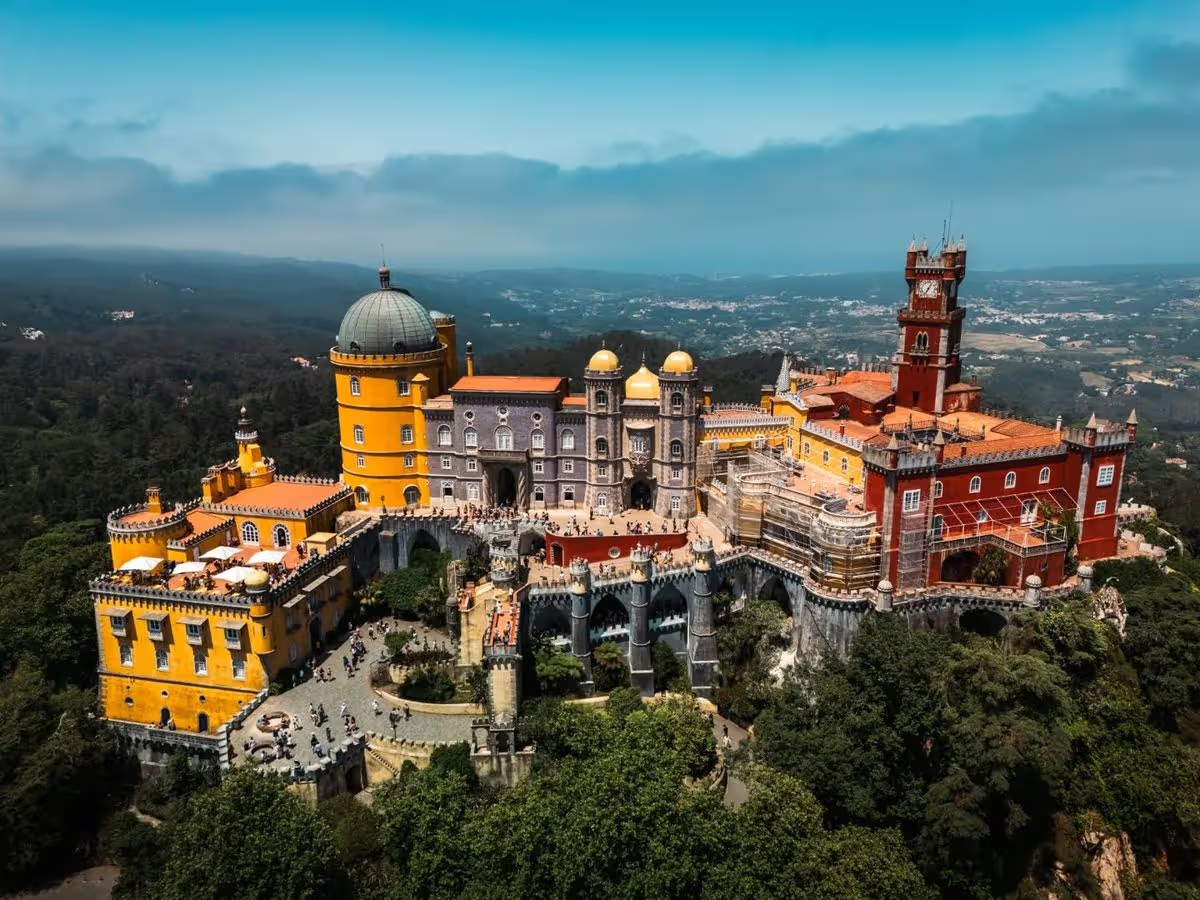
Pena Palace, built in the 1840s by King Ferdinand II, combines Moorish, Gothic, Renaissance, and Manueline elements into something that should not work, but does. The colours are bold, almost defiant, and somehow right in mountain mist.
Quinta da Regaleira is stranger.
A private estate built in the early twentieth century, filled with occult symbolism, initiation wells descending into darkness, tunnels connecting grottos and towers.
The buildings become more interesting when you understand intent.
Romanticism as a movement. Occult currents in early twentieth-century Portugal. Architecture designed to create psychological effects.
Not just a backdrop for photographs.
Why urban craft traditions persist
Portuguese cities kept craft traditions that many European cities industrialised away, partly because of economics, partly because of history.
Dictatorship under Salazar (19321974) suppressed industrialisation, inadvertently preserving traditional production. Post-revolution economic challenges limited capital for rapid modernisation. EU membership brought development, but also heritage preservation.
The result is a cityscape where hand-painted tiles still cover buildings, where fado remains culturally significant rather than purely performative, where crafts still operate as viable businesses serving local markets.
It will not last forever.
Apprenticeship takes years. Early pay is low. Younger generations often choose careers with faster returns.
At the same time, UNESCO recognition and tourism create demand, which can help preserve craft, but can also pressure it to simplify.
What you are witnessing in Lisbon and Porto is not a frozen tradition.
It is a living practice.
Adapting to contemporary economics while trying to keep technical integrity intact.
And it leaves you with a quieter understanding of what urban culture really is.
Not just monuments.
People.
Hands.
Songs.
Materials that still shape how a city looks and feels.
For customised Lisbon and Porto cultural itineraries:
manish@unhotel.in
.avif)
.avif)
Subscribe to stay inspired.
Stories, ideas, and slow journeys - from hidden villages to distant valleys, straight to your inbox.
.avif)