

Terroir & Tradition
Italy’s wine story is shaped by place and time from hill-town vineyards to family cellars where tradition, landscape, and everyday meals come together to create wines meant to be lived with, not merely tasted.

.avif)
A wine immersion across Italy’s hidden vineyards
Italy’s wine story isn’t told in tasting rooms with scorecards.
It’s whispered in the cellars of fourth-generation winemakers. It’s written in the ledgers of family estates where bottles are spoken for before the harvest even begins. It lives in indigenous grapes that refuse to thrive anywhere else.
This is wine as culture, not commodity.
What follows isn’t a tour. It’s a way in anchored by estates that don’t advertise, and experiences reserved for travellers who understand that the best bottles are rarely found on a wine list.
Piedmont: where Barolo becomes belief
In the Langhe, fog rolls through the valleys and gives Nebbiolo its name (from nebbia, fog). Barolo here isn’t just wine. It’s a family legacy, a village economy, and a long-running argument about tradition versus innovation.
Spend time in a cellar where the conversation is about patience: large Slavonian oak, long ageing, and why some producers refuse to rush anything.
A day in Piedmont should include the land, not just the glass.
- Walk the vineyards in the morning, when the hills still feel private.
- Go truffle hunting outside Alba with a local hunter and dog.
- Eat lunch in a small osteria where the truffle goes straight onto warm pasta, paired with Alta Langa sparkling wines that rarely leave the region.
Stay somewhere that keeps you close to the rhythm of the place a small castle or estate in the Langhe where dinner is served slowly, and the cellar is part of the house, not a showroom.
Tuscany: beyond the obvious
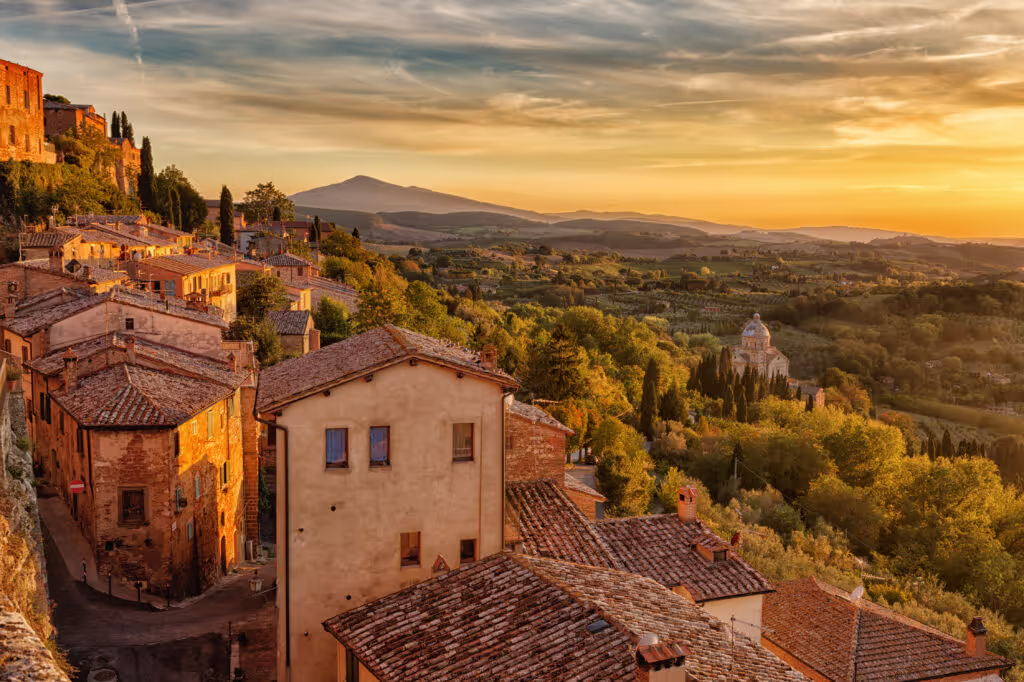
Everyone goes to Tuscany. Few see the parts that still feel unperformed.
Think coastal Maremma and Bolgheri, where the Super Tuscan story began, and inland pockets where soil and altitude change the wine completely.
A good Tuscan immersion is less about famous labels and more about understanding why one vineyard ages for decades while another peaks early.
- Taste with producers who work by appointment, not footfall.
- Spend time in the vineyard with someone who can explain exposure, slope, and why a few metres can change everything.
- Try blending from barrel samples, not as a gimmick, but as a way to understand that winemaking is often curation more than creation.
Stay at a small estate where the evening’s bottle is chosen from a personal cellar, not a printed list.
.avif)
Veneto: Valpolicella, quietly serious
Valpolicella is known for Amarone, the powerful dried-grape wine that tastes of dark fruit, spice and tobacco.
But the real discovery is the range.
- Ripasso (a red wine re-fermented on Amarone grape skins) often drinks like Amarone’s more agile sibling.
- Recioto (the traditional sweet wine) predates Amarone by centuries.
Visit a producer who still dries grapes the old way on racks, with time and airflow doing the work. Taste older vintages if possible. It changes your understanding of what these wines can become.
Pair it with lunch that makes sense in the region: aged cheeses, cured meats, simple bread, and a table that runs long.
Etna and Pantelleria: wine at the edge of possibility
Etna’s volcanic soils produce wines that taste of minerals and smoke, as if the earth itself is speaking.
Taste Nerello Mascalese from old vines rooted in lava rock and you understand why terroir (the taste of place) isn’t a marketing term here. It’s geology.
On Etna’s northern slope, explore the idea of contrade (individual volcanic districts). Taste wines from different contrade side by side and you start to recognise how lava flows, altitude and exposure shape flavour.
Then, if you want to go further, fly to Pantelleria, closer to Tunisia than Sicily.
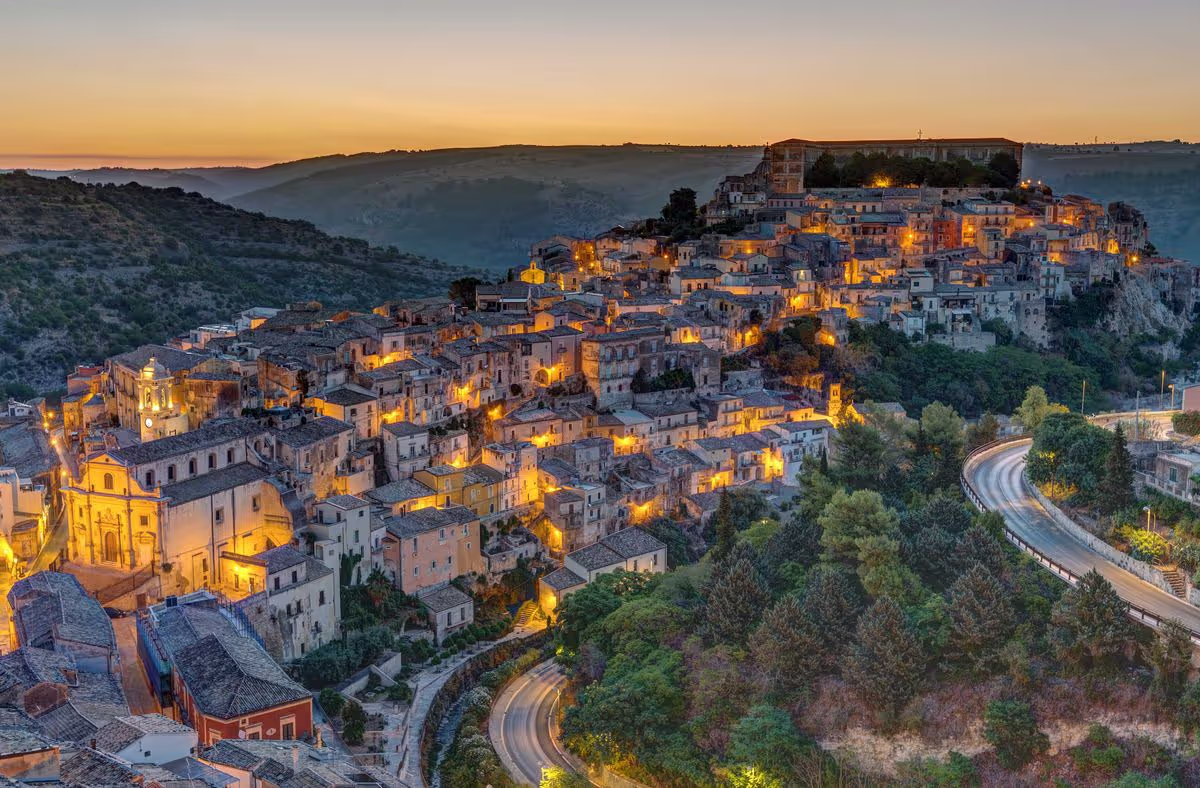
Here, zibibbo grapes are grown low to the ground, protected from wind by stone walls. You can see the labour in the landscape. Taste passito di Pantelleria (sweet wine made from sun-dried grapes) and it feels less like a dessert wine and more like an archive.
Stay on Etna’s slopes in a place that keeps you close to the land a restored estate where the air is cooler, the mornings are quiet, and the volcano glows at night.
.avif)
Friuli: Italy’s white wine laboratory
In Friuli Venezia Giulia, white wines can age like reds.
This is a borderland where Slovenia, Austria and Italy collide, and the wine culture is as layered as the history.
Here you’ll find:
- Skin-contact whites (often called orange wines) made in the old way.
- Wines aged in large oak and clay vessels.
- Producers who think in decades, not releases.
Visit a cellar where the techniques are ancient and deliberate wines fermented with skins, aged slowly, and served with the kind of food that belongs to the region.
End in the Venice lagoon if you like the poetry of it: an island vineyard, a nearly-lost grape variety, and a glass of golden wine at sunset.
Why this matters
Italian wine resists industrialisation because Italian winemakers resist compromise.
These are families who choose the hard way, again and again. Estates where the best vintages are held back for children and grandchildren. Bottles that never make it to restaurants because they were promised to friends years ago.
This journey isn’t about ticking regions off a map.
It’s about understanding that wine, in Italy, is family history in liquid form.
What you bring home isn’t just bottles. It’s relationships the kind that turn into a direct shipment from a small producer, an invitation to a harvest lunch, a standing welcome at a farmhouse where you’re no longer a stranger.
For itinerary details and estate access arrangements:
manish@unhotel.in
.avif)
Subscribe to stay inspired.
Stories, ideas, and slow journeys - from hidden villages to distant valleys, straight to your inbox.
.avif)