Sicily Uncoded
A slow, inside look at Sicily where volcanic landscapes, village festivals, and family kitchens shape daily life, revealing the island through flavour, ritual, and human connection rather than headline sights.

Beyond the Godfather: an insider’s Sicily
Sicily isn’t Italy.
Ask a Sicilian and you’ll hear it quickly — sometimes with pride, sometimes with a shrug, often with both. This island has been Greek, Roman, Arab, Norman, Spanish. It has absorbed everything and stayed stubbornly itself.
What you get is a cultural palimpsest (layers of history written over one another) that refuses neat summaries.
This isn’t the Sicily of bus tours and tidy day plans. It’s the island you experience through people — private homes, family estates, corners that don’t announce themselves online. Sicily, unfiltered: complicated, occasionally difficult, and deeply memorable.
Etna: living with the volcano
Etna isn’t scenery. It’s the organising principle of eastern Sicily.
Locals speak about the volcano like a temperamental relative: respected, feared, occasionally cursed, but ultimately accepted as family. When it rumbles, people notice — but they don’t panic. Life here has always been negotiated with the mountain.
Go up with someone who understands it properly — ideally a volcanologist who can read the ground, the wind, the sulphur smell, and explain why certain trails close without warning.
You walk across young lava fields. You pass vineyards that look impossible, yet produce wines that taste of minerals and smoke because that’s literally what the soil is.
.avif)
Wine, made the Etna way
At Frank Cornelissen’s estate, you meet a winemaker who has rejected most modern rules. Amphorae buried in the ground. Indigenous yeasts. Minimal intervention. His wines divide opinion — and that’s part of the point. Etna doesn’t do polite.
Dinner, close to the source
End the day at a family-run agriturismo near Linguaglossa where the ingredients come from within sight of the table: pasta made that morning, ricotta from sheep grazing on volcanic slopes, wine from vines planted by someone’s grandfather.
Stay at Monaci delle Terre Nere, a restored monastery on Etna’s slopes, where breakfast feels like it belongs to the land: eggs, local cheeses, fruit, and air that makes you sleep earlier than planned.
Palermo: chaos as culture
Palermo runs on systems that make sense only to people born into them.
Traffic looks lawless until you realise it’s a language. Markets close when they close. Plans bend. Sometimes they break. It’s not dysfunction so much as flexibility — a survival skill on an island that has been conquered, governed and re-governed for centuries.
Go with a local who knows the city’s hidden permissions: which courtyards stay unlocked, which family businesses haven’t changed hands in generations, which doors open if you knock the right way.
Start at Ballarò Market early, before the crowds. Fish on ice. Voices rising like opera. Old women arguing over artichokes with the seriousness of critics.
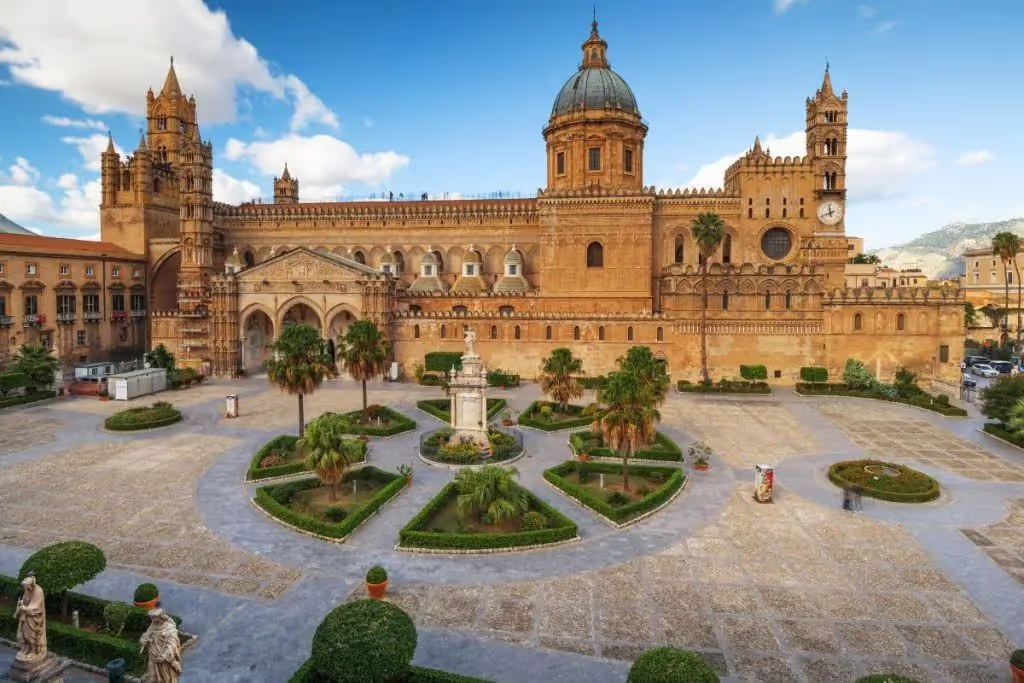
Then slip into the Palazzo dei Normanni and the Cappella Palatina with someone who can show you the work behind the beauty: restorers maintaining 12th-century mosaics using Byzantine techniques. Not museum pieces — living objects still being cared for.
Lunch is street food, properly.
At Franco U Vastiddaru, order pani ca’ meusa (a sesame roll filled with spleen and lung). It’s not glamorous. It’s Palermo.
In the evening, do Palermo the way it rewards you: dinner in a small private dining room where the chef cooks what looked best at the market that morning. No menu. No performance. Just trust.
Stay at Palazzo Butera, where contemporary art sits beside frescoes in ways that shouldn’t work, but do.
The Baroque southeast: obsession rebuilt
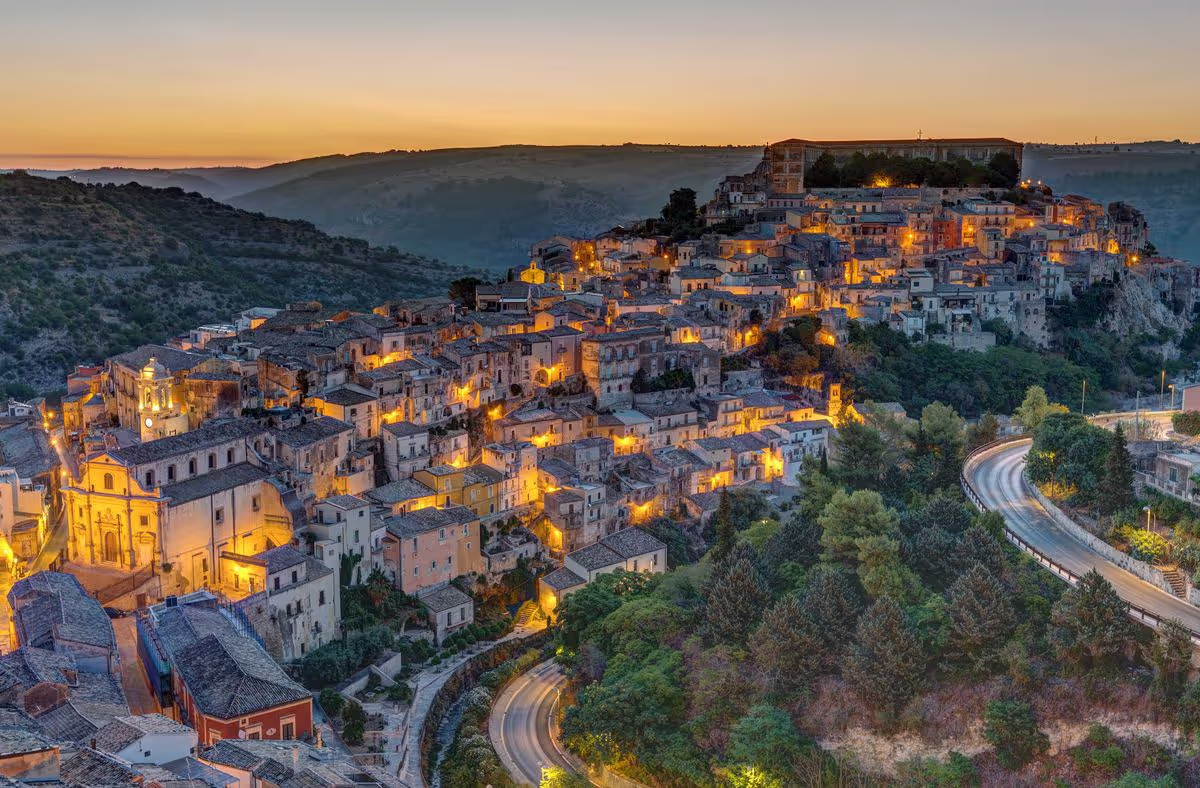
In 1693, an earthquake devastated parts of southeast Sicily. What followed wasn’t just reconstruction. It was an aesthetic decision.
Towns like Noto, Ragusa and Modica were rebuilt in full Baroque — ornate balconies, theatrical facades, curves that feel almost excessive. It can be overwhelming in the best way.
Walk it with an architectural historian and the streets start to make sense: why certain motifs repeat, how the engineering holds, which rivalries and alliances shaped the look of entire neighbourhoods.
In Modica, stop at Antica Dolceria Bonajuto, where chocolate is still made in the old style: cocoa ground with sugar so it stays grainy, flavoured with cinnamon or chilli. It tastes nothing like the chocolate you grew up with. That’s the point.
If you can, catch an opera or concert at Teatro Tina di Lorenzo in Noto — a small jewel-box theatre built for sound before amplification.
Stay at Palazzo Ducale Venturi in Ragusa, a palazzo that still feels lived-in, not staged.
The islands beyond the island
Sicily has satellites — smaller islands that feel like Sicily turned up a notch: more remote, more insistent on doing things their own way.
Pantelleria: where Africa begins
Pantelleria sits closer to Tunisia than to Sicily. It’s volcanic, windswept, and dramatic in a way that doesn’t always photograph well.
The signature architecture is the dammuso (a stone house with a domed roof designed to collect rainwater). The signature wine is passito di Pantelleria (a sweet wine made from zibibbo grapes dried under the sun).
Stay in a restored dammuso and spend your days hiking between volcanic lakes, swimming in natural hot springs, and eating fish that was in the sea that morning.
Pantelleria also teaches you why certain products can’t be faked.
The capers here are famous for a reason: volcanic soil, sea air, no irrigation, and a stubborn refusal to rush anything.
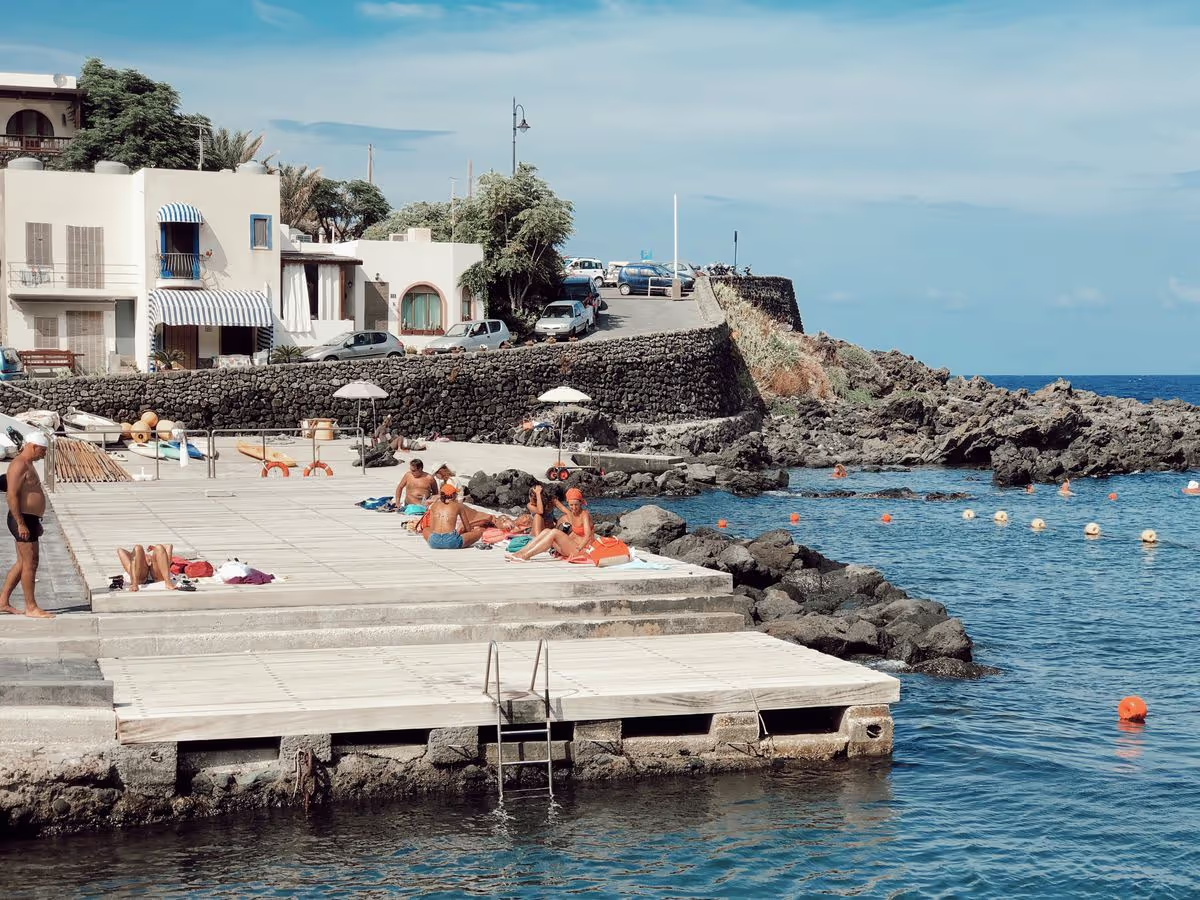
Favignana: the tuna cathedral
Favignana, in the Egadi islands, built its identity around bluefin tuna and the mattanza (the traditional tuna harvest). The ritual is now largely a memory — bluefin stocks declined and the practice became unsustainable — but the old tonnara (tuna factory) remains, telling the story of an industry that shaped lives.
Visit with someone who worked it, if you can. The stories are visceral and complicated: pride, brutality, respect, survival.
Today, eat tuna in a family restaurant where recipes are passed down by demonstration, not written down. Stay at Tonnara Florio, a former processing factory turned hotel that keeps the industrial bones intact.
The uncomfortable truth (and why it matters)
Sicily isn’t easy.
It’s not organised, not efficient, and not particularly concerned with visitor comfort. Things break. Plans change. Driving can feel like a contact sport.
But Sicily offers something increasingly rare: a culture that hasn’t been fully productised for tourism.
When a restaurant has been family-run for four generations, it’s not a marketing claim. It’s how the recipes survived. When a winemaker says their technique is old, they mean it in the literal sense — learned from a parent, learned from a parent, back through time.
You don’t tour Sicily. You accept it.
And if you do — if you let it challenge you a little — you leave with something more than highlights: a sense of how culture survives, how traditions endure, and why some places refuse to make things easy because easy isn’t the point.
For access to our Sicily network and customised itineraries:
manish@unhotel.in
.avif)
.avif)
.avif)
Subscribe to stay inspired.
Stories, ideas, and slow journeys - from hidden villages to distant valleys, straight to your inbox.
.avif)