

Stone, Water, Indigo
Shikoku is Japan’s quieter heart, where pilgrimage routes, river valleys, living crafts, and small coastal towns reveal a slower rhythm shaped by faith, landscape, and continuity.

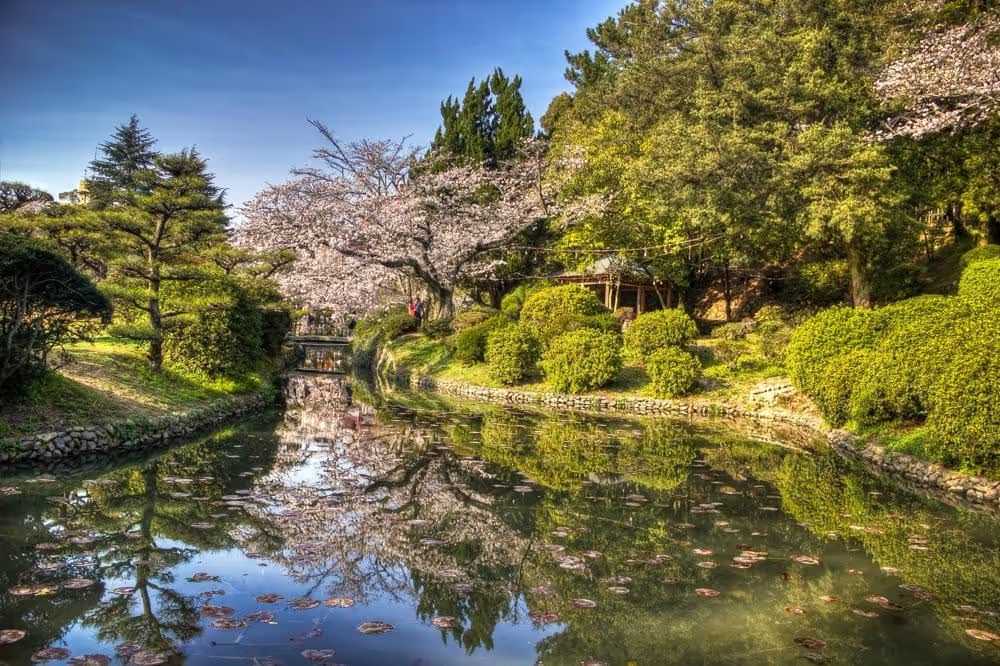
Shikoku as Japan’s last sanctuary
Shikoku is what Japan looked like before the bullet trains reorganised everything.
This is the island many travellers skip: four prefectures set in the Seto Inland Sea, close enough to Honshu to feel within reach, but remote enough that mass tourism never quite took hold. The result is a rare mix of craft traditions, quiet valleys, and contemporary art that somehow doesn’t feel out of place beside 1,200-year-old Buddhist sites.
What follows isn’t a checklist of temples (though the pilgrimage exists, famously). It’s a route through landscapes and practices that survived precisely because they weren’t commodified.
Refuge, disguised as backwater.
Naoshima: where concrete met contemporary
Naoshima shouldn’t work.
A small island that was quietly fading until architect Tadao Ando’s poured concrete and natural light arrived, and Benesse began shaping it into an art destination.
The Chichu Art Museum is built so completely into a hillside that you barely see it until you’re inside it. The experience is the point: permanent installations by a small number of artists, designed for these exact spaces. Natural light enters through geometric skylights. The room changes as clouds move. You don’t just look at art here. You notice your own perception shifting.
Elsewhere, the Art House Project in Honmura village works differently. Old homes and small temples become site-specific installations. Contemporary work sits inside lived architecture, and the friction is what makes it interesting.
And yes, the pumpkins photograph well. But they matter more as markers. On Naoshima, art isn’t contained in museums. It’s allowed to live in the landscape.
Tokushima: the chemistry of blue
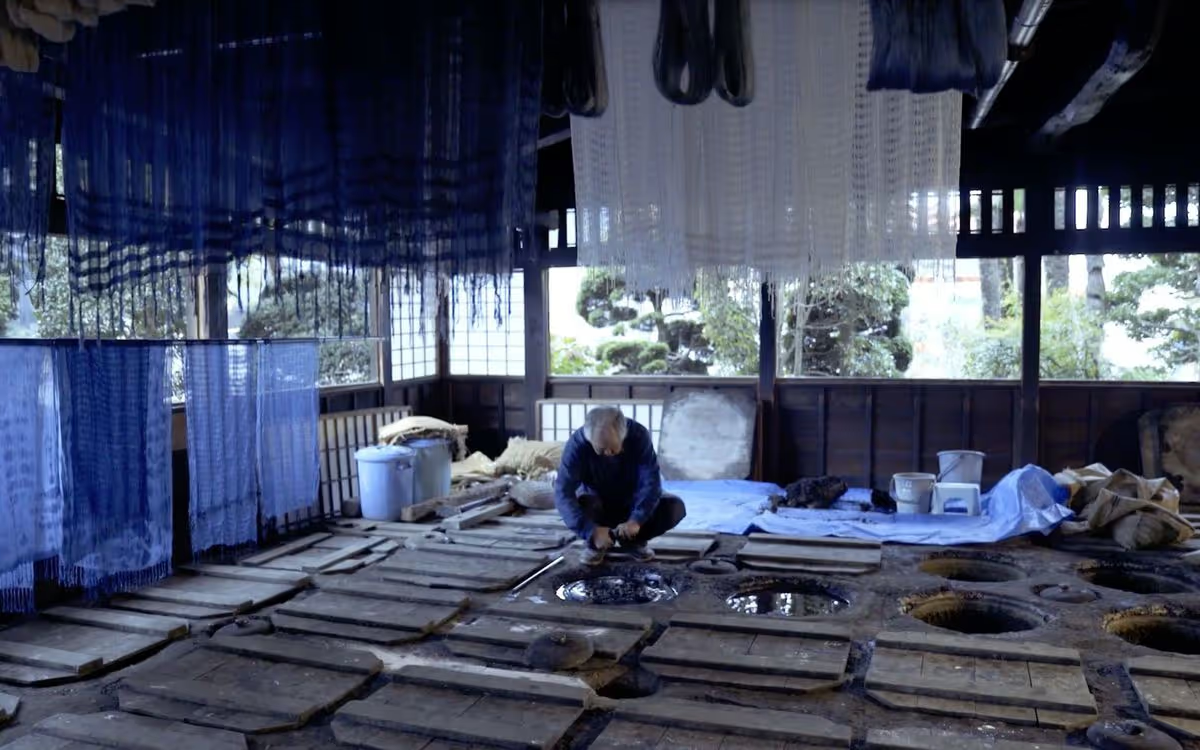
Tokushima’s identity is wrapped in indigo. Not metaphorically. Literally.
During the Edo period, this prefecture was Japan’s primary indigo production centre, producing ai (natural indigo) that dyed everything from workwear to kimono.
What makes Tokushima indigo different is process.
Traditional dyeing uses sukumo (composted indigo leaves), lye water, and fermentation in wooden vats that have been in use for decades. It’s living chemistry. The colour deepens through repeated immersion and oxidation. Temperature and pH change the outcome. Fabric weight changes absorption. The same vat can produce different blues on different days.
If you try it yourself, the result won’t be perfect. That’s the lesson. Perfection is mechanical. Craft is human.
For context, Tokushima also holds another inheritance: Awa Odori (Tokushima’s famous dance). It’s often associated with the August festival, but the deeper story is discipline. The rhythm looks simple until you try it. Your body doesn’t cooperate immediately. That’s how you know it’s real.
Iya Valley: where remoteness preserved life
The Iya Valley is often described as one of Japan’s “hidden valleys” — a place so geographically isolated that communities developed in relative independence for centuries.
There’s a story that Heike clan refugees fled here after losing the Genpei War in 1185. Whether that’s history or romance doesn’t matter much. The valley feels hidden.
The approach through Oboke Gorge tells you why: a narrow river carved between rock formations, water so green it looks unreal. It isn’t. Minerals do that.
The vine bridge is, technically, a tourist site now. But it’s also a reminder of how people once moved through this terrain: functional, precarious, designed for necessity rather than comfort.
Nearby, restored thatched-roof houses show how valley communities lived well into the 20th century: buckwheat farming, charcoal burning, silk production, life organised around what steep land and limited sunlight would allow.
These weren’t simple times. They were hard times.
And that’s the uncomfortable truth: the valley stayed “authentic” because leaving was easier than staying.
Kochi: rivers, castles, and bonito flames
Kochi feels less developed than it “should” — and that’s part of its charm.
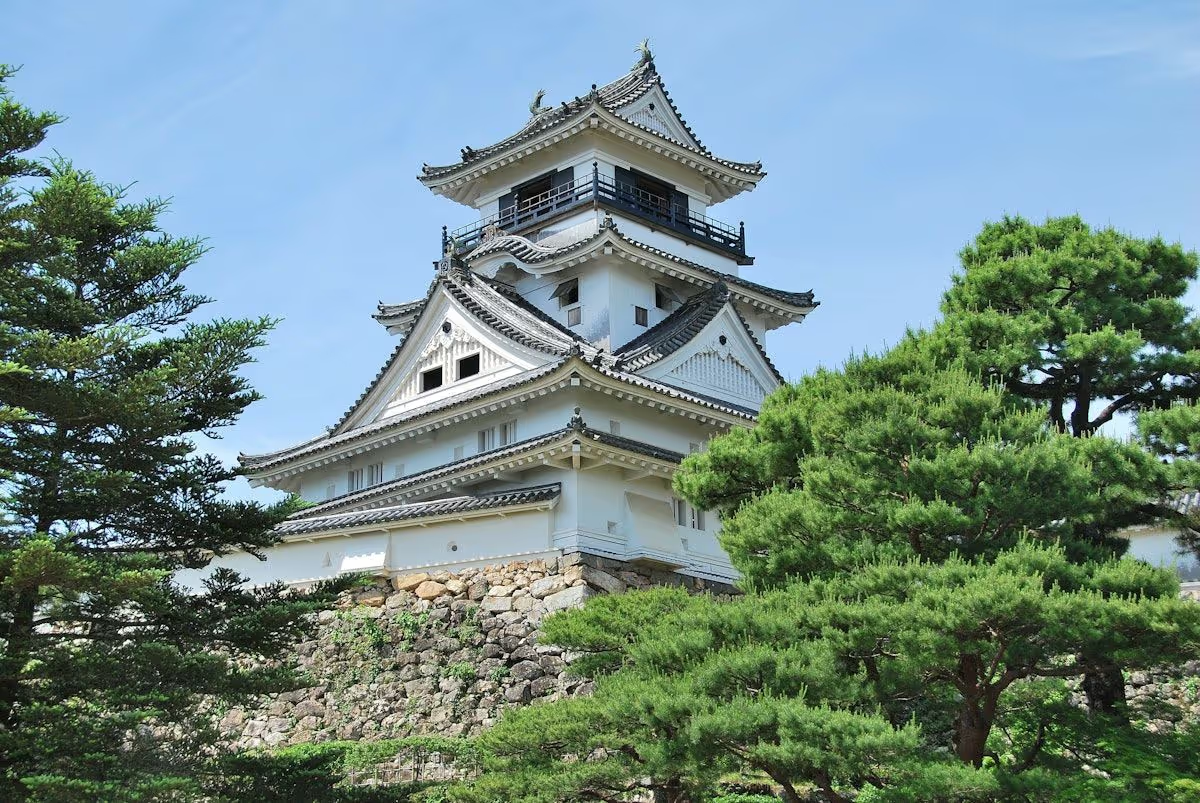
It has dramatic Pacific coastline, low population density, and a castle that survived the Second World War intact.
Kochi Castle is one of the few original castles remaining in Japan. Not reconstructed. Original. The wooden stairs are steep, the rooms are spare, and the view from the keep reminds you what castles were actually for.
Then there’s the Niyodo River, often described as one of Japan’s clearest. On the right day, the water looks like glass. Locals even have a name for it: “Niyodo Blue” (仁淀ブルー).
Kochi’s food identity centres on katsuo no tataki (bonito lightly seared). The detail matters: it’s seared over burning rice straw, not charcoal. Straw burns hot and fast, creating a thin char while keeping the inside raw. Served with ginger, scallions and ponzu (citrus-soy sauce), it tastes like smoke and ocean.
It’s regional cuisine that doesn’t travel well, because it depends on freshness and flame.
Dogo Onsen: where bathing is architecture
Dogo Onsen is often described as Japan’s oldest hot spring, with references in 8th-century texts. Whether it’s the oldest is hard to prove. What’s easy to feel is continuity.
People have been bathing in these waters for over a thousand years.
The main bathhouse, built in 1894, is a three-storey wooden structure with a presence that suggests importance without explaining itself. Many people say it inspired the bathhouse in Spirited Away. You can see why.
If you prefer more space, the newer annex offers a calmer way to experience the ritual. You follow the etiquette: wash thoroughly before entering, move quietly, let the heat do its work.
The water is hot enough that you learn to respect time.
This isn’t spa relaxation. It’s therapeutic immersion.
Ritsurin Garden: designed mountains
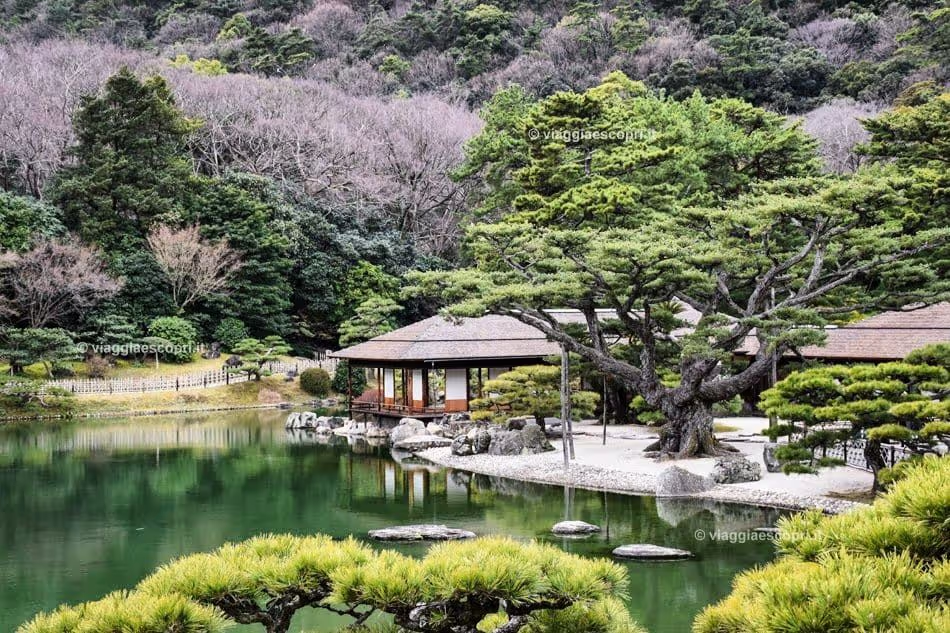
Ritsurin Garden in Takamatsu took over a century to complete.
It uses “borrowed scenery” — Mount Shiun becomes part of the garden’s composition even though it sits beyond the walls. Forced perspective, strategic tree placement, ponds positioned to frame views that feel natural but are entirely constructed.
You’re inside a machine designed to produce tranquillity.
Sit in a teahouse with matcha (powdered green tea) and you start to understand the Japanese genius for making effort look like ease.
Kurashiki: preserved by accident
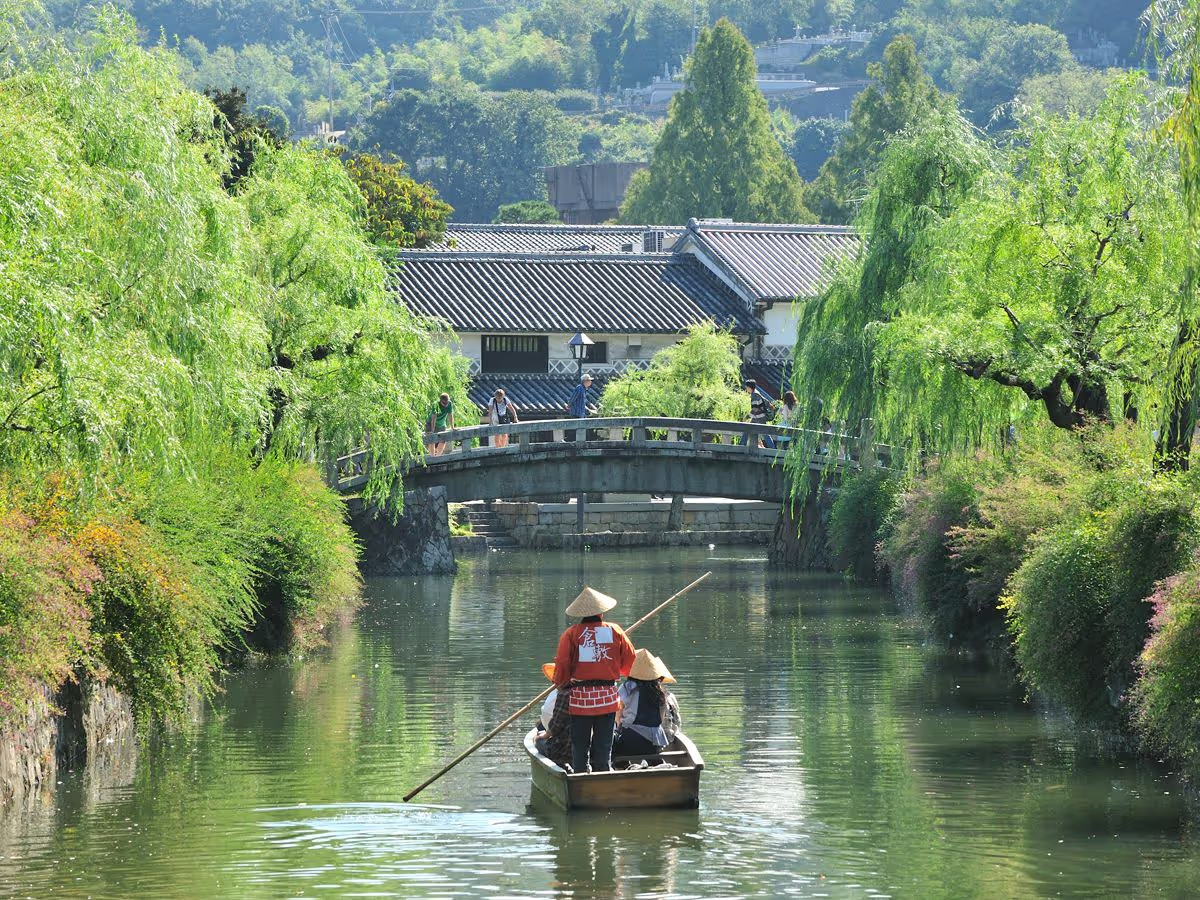
Kurashiki’s Bikan Historical Quarter survived because it was economically irrelevant.
When Japan industrialised, the canal-based merchant district was bypassed by railways. The white-walled storehouses and willow-lined waterways remained intact because there was no reason to demolish them.
Now it’s a preservation district. The buildings have been repurposed into museums, galleries and cafés, but the structures themselves are original.
The Ohara Museum of Art — Japan’s first museum of Western art — sits inside a converted rice granary. The collection includes European masters gathered in the early 20th century, displayed inside a Japanese merchant warehouse. The contrast is deliberate. The collision is the point.
Why Shikoku matters now
Shikoku offers what much of Japan struggles to hold onto: a version of traditional culture that isn’t constantly performed for an audience.
The craft traditions here survived because they stayed economically viable. The landscapes stayed quiet because development went elsewhere. Contemporary art coexists with pilgrimage routes. Indigo dyers use fermentation techniques that are centuries old, while selling to modern fashion houses. Villages maintain thatched roofs because keeping them became a point of pride.
It won’t stay this way forever. Tourism pressure rises. Infrastructure improves. The edges soften.
But right now, Shikoku exists in a rare state: accessible enough to visit, remote enough to remain coherent.
You leave understanding that Japan’s cultural depth doesn’t live only in Kyoto’s temples or Tokyo’s museums.
It persists in places that never became famous.
For customised Shikoku and regional Japan itineraries:
manish@unhotel.in
.avif)
.avif)
Subscribe to stay inspired.
Stories, ideas, and slow journeys - from hidden villages to distant valleys, straight to your inbox.
.avif)