

Sahara Desert, Morocco: Beyond the Dunes
From Marrakech to Fes, sahara in morocco takes you into a journey of historical classics never witnessed before

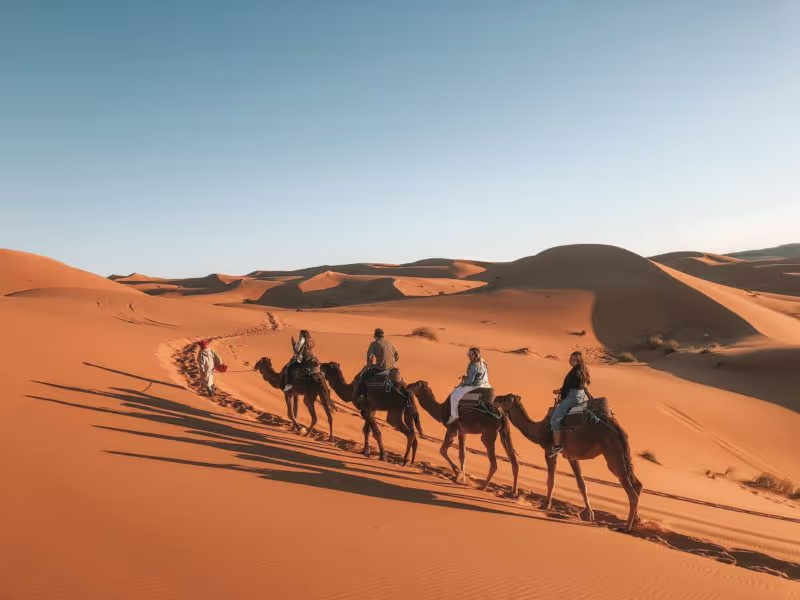
A journey into silence, stars, and the kind of quiet you can actually feel
The Sahara doesn’t arrive politely.
One moment you’re driving through rocky plains and scrub, and the next the land turns to sand and keeps going. The scale defeats you. Your mind, trained on city distances and Google Maps, stops trying to measure. Out here, dunes can look ten minutes away and still take an hour.
If you’ve grown suspicious of phrases like ‘transformative journey’, you’re not alone. The Sahara doesn’t promise anything. It simply gives you space. What you do with it is up to you.
Yes, there are camel rides and sunsets. But the real shift is quieter. It’s what happens to your thoughts when the visual noise stops. What your body does when the only clock is the sun. How time stretches when there’s nothing to ‘keep up’ with.
The Moroccan Sahara offers something that feels increasingly rare: true distance from the world, Berber hospitality (Amazigh, Morocco’s Indigenous communities), and a night sky that reminds you how small your phone screen is.
Why the Moroccan Sahara matters
Morocco’s Sahara is the western edge of a vast desert system. It may not be the most remote section, but it is one of the easiest to experience well, without turning it into an expedition.
From Marrakech, you can reach the dunes in a long drive. From Fes, it’s closer. That accessibility doesn’t dilute the desert. It just makes it possible for travellers who don’t have weeks to spare.
Morocco has two main dune systems travellers talk about:
- Erg Chebbi (near Merzouga): taller dunes, easier access, and more choice in camps.
- Erg Chigaga (reached via Zagora or M’Hamid): more remote, reached by 4x4 across hamada (rocky desert) and reg (gravel plains), then into the ergs (sand dunes).
If it’s your first Sahara trip, or you’re short on time, Erg Chebbi gives you the classic dunes experience without complications. If you want more solitude and can add days, Erg Chigaga rewards the effort.
The journey to the dunes: landscape as narrative
Getting to the Sahara is part of the story, if you don’t treat it like a transfer.
From Marrakech, the road climbs the High Atlas via Tizi n’Tichka (a mountain pass at around 2,260 metres). Valleys turn to bare ridges. Villages appear like they’ve grown out of the hillside.
Many routes pass Aït Benhaddou (a ksar, or fortified village). Yes, it’s popular. But it’s also a masterclass in earthen architecture.
Further on, the Dadès Valley and Todra Gorge offer a different Morocco: canyon walls, palm oases, kasbahs (fortified homes) in various states of repair.
If you can, take two days to reach the dunes. One night en route changes everything. You arrive less rushed, and the desert meets you on better terms.
Hospitality in harsh places
In the desert, hospitality isn’t a personality trait. It’s a survival system.
The tea ritual is the simplest way to understand this. Moroccan mint tea is not just a drink. It’s a welcome, a pause, a way of saying ‘you’re safe here’. It’s poured from height to create foam, and it takes its time.
For Indian travellers, the parallel is easy. Chai is rarely just chai.
In good camps, you’ll feel this hospitality without it becoming theatre. The best teams are often local, and the warmth is matter-of-fact.
Erg Chebbi: the great dunes
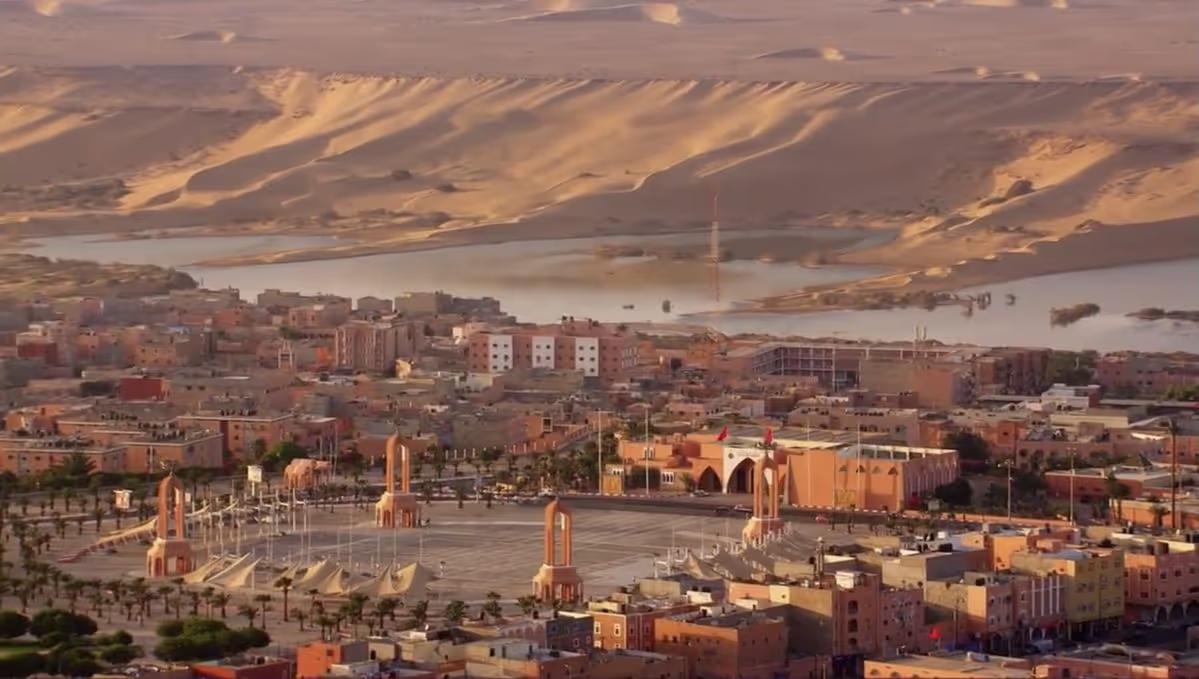
From Merzouga, the dunes rise like a wall.
The best time to be out there is not a secret. It’s the hour before sunset and the hour after sunrise, when sand stops looking flat and starts showing its shape.
Climbing a dune is harder than it looks. Sand slides. Your calves complain. You stop pretending you’re very fit. Then you reach the ridge and the view does what it does.
If you’re alone up there, the silence can feel physical. You hear your breath. You hear fabric move. That’s it.
Camels are the traditional way to enter the dunes. The pace is slow. The saddle is not designed for comfort. But there’s something honest about arriving at camel speed.
We usually recommend a sunset camel approach, a night in camp, then a sunrise walk or a 4x4 return depending on comfort.
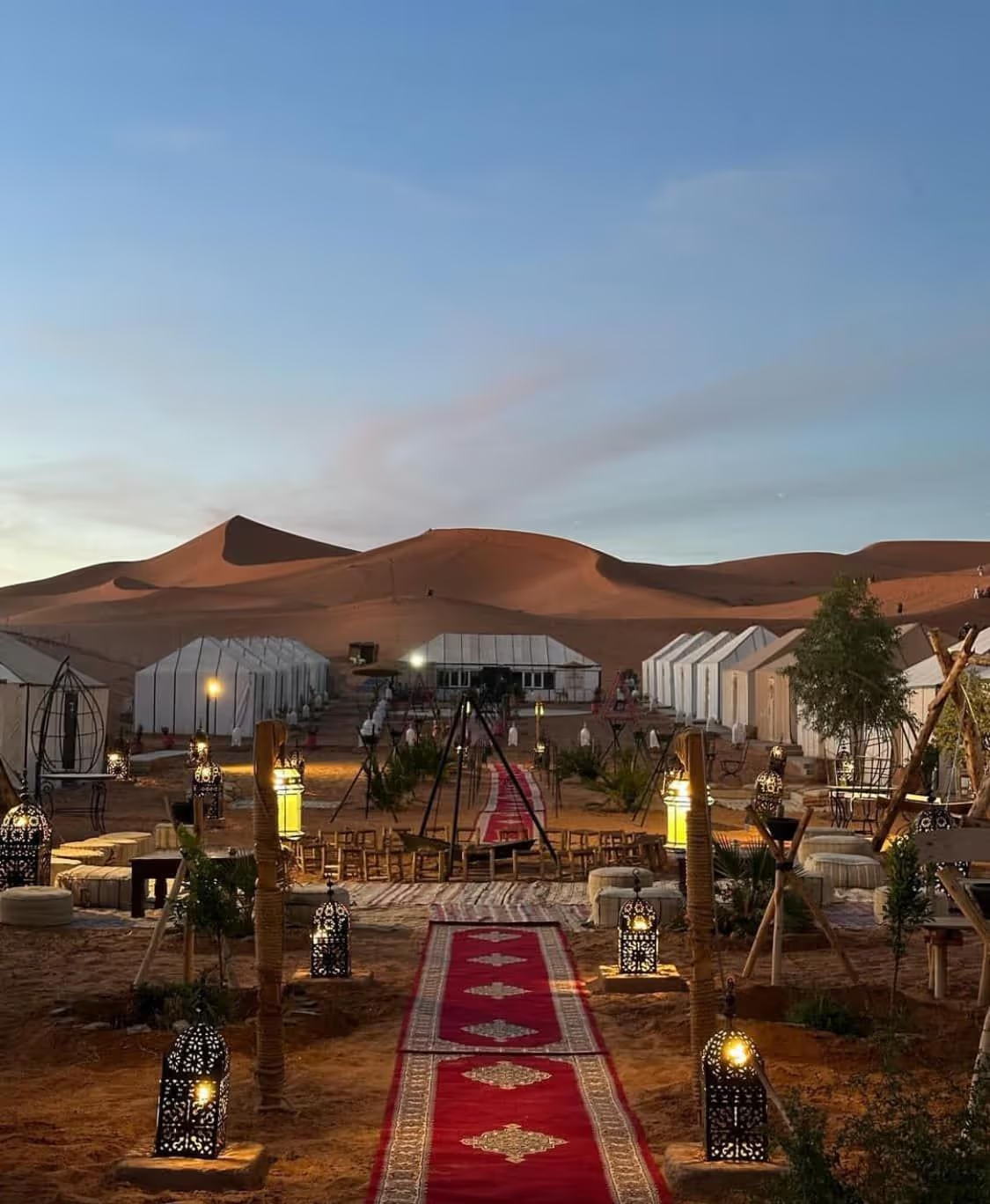
The luxury desert camp: comfort, without the circus
The best desert camps in Morocco have improved a lot in recent years. Real beds. Proper linen. Private bathrooms. Good food. Solar power.
But ‘luxury’ in the Sahara is less about polish and more about thoughtfulness:
- A location far enough from the village that the sky stays dark
- Tents that feel beautiful, not staged
- Warm water and clean bathrooms (you will be grateful)
- Food that is properly cooked, not rushed
- Staff who feel like hosts, not performers
- Environmental care that is practical, not just a line on a website
This is where we’re picky. The wrong camp can make the desert feel like a theme park. The right one makes it feel like a pause.
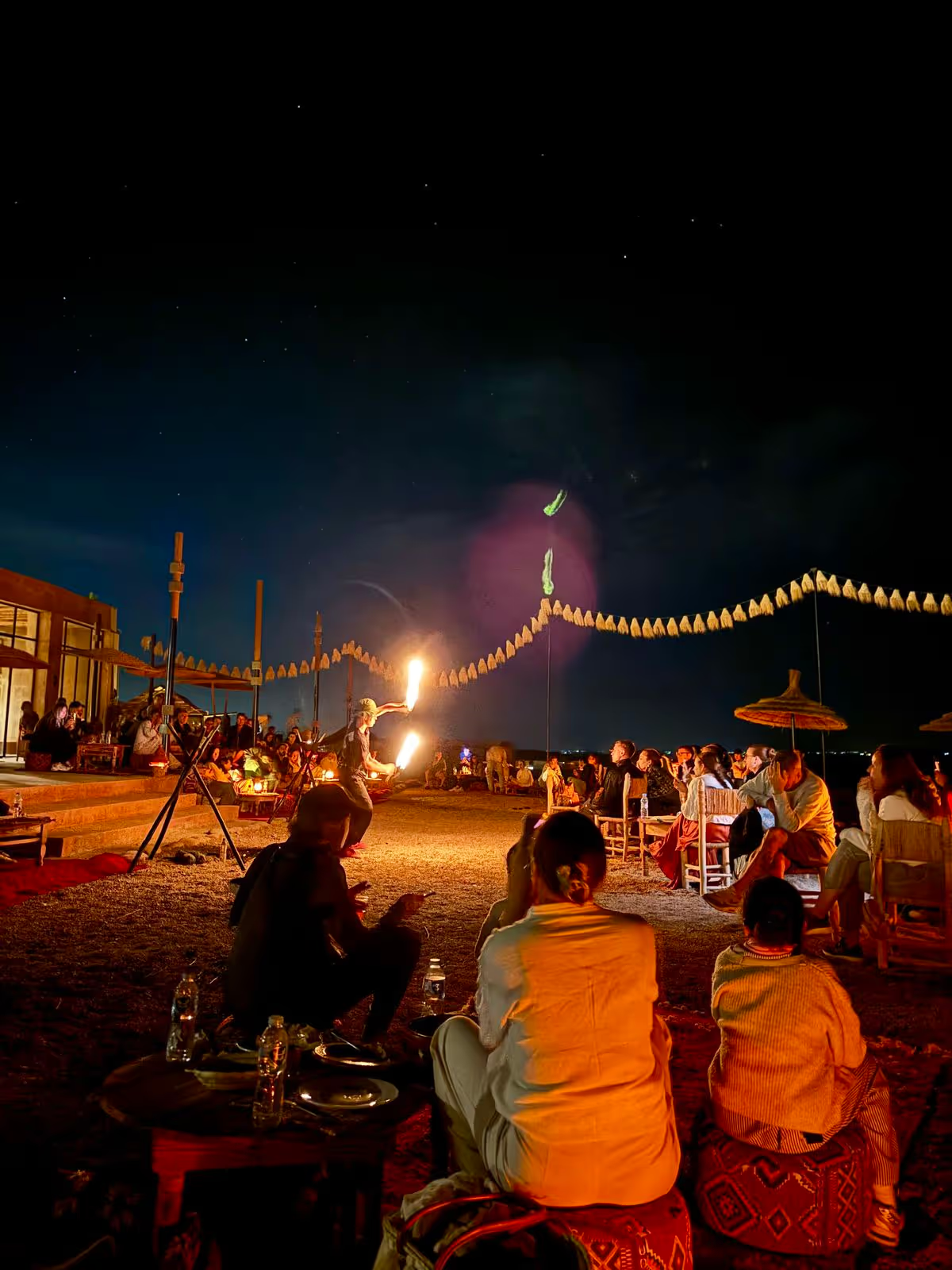
Stargazing: the Sahara’s real spectacle
If you’ve only known city skies, the Sahara can be a shock.
On a clear night, the Milky Way isn’t a faint smudge. It’s a bright band across the dark. Satellites move like slow stars. Meteors show up often enough that you stop making a wish every time.
Some camps offer guided stargazing, sometimes with telescopes. It’s lovely. But the real moment is simpler: lying on a dune slope, bundled up, watching the sky do what it has always done.
The silence: what happens when noise stops
The Sahara’s most valuable offering isn’t a view. It’s the absence of sound.
Modern life has a constant hum, even when we call it ‘quiet’. Out here, that hum disappears. Your mind reacts. Sometimes it relaxes. Sometimes it gets restless. Sometimes it brings up thoughts you’ve been avoiding.
The desert doesn’t transform you. It simply creates the conditions where you might notice what’s already there.
When to go
- Spring (March to May): comfortable days, cool nights, peak season
- Autumn (September to November): similar to spring, often excellent skies
- Winter (December to February): pleasant days, very cold nights, fewer travellers
- Summer (June to August): extreme heat, many camps close
Bring layers. Desert cold is not romantic. It’s real.
Beyond the dunes
If you have time, there are a few add-ons that deepen the story:
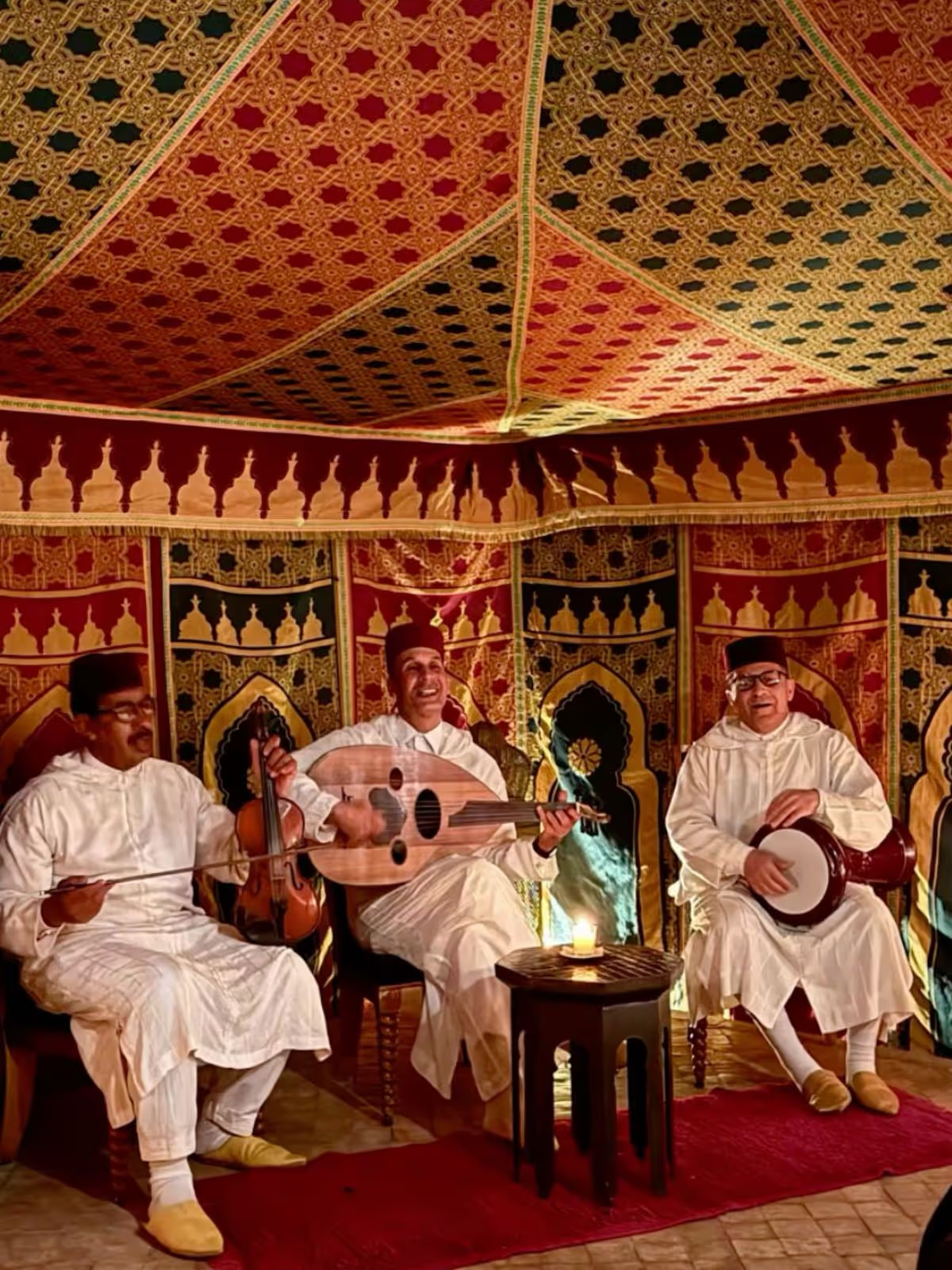
- Khamlia: a village known for Gnawa music (a trance-like musical tradition with roots in sub-Saharan Africa)
- Erfoud: fossil workshops and desert geology (worth doing properly, not as a souvenir stop)
- Oasis towns: where palm groves and irrigation systems make life possible
A few practical notes
- Duration: minimum two days and one night. Two nights is better.
- Private vs group: private travel gives you pacing and quiet. Group travel saves cost but follows a fixed rhythm.
- What to pack: scarf or cheche (head covering), sunscreen, lip balm, headlamp, a small daypack, warm layers
After the Sahara
The Sahara tends to linger.
Weeks later, you’ll remember the silence, the sky, and the way time moved without being pushed. Some people call it the highlight of Morocco. Some find it challenging. Both reactions are honest.
If you want the Sahara done properly, we’ll help you choose the right dunes, the right route, and the right camp. Comfort, yes. But also quiet. The kind that stays with you.
.avif)
.avif)
Subscribe to stay inspired.
Stories, ideas, and slow journeys - from hidden villages to distant valleys, straight to your inbox.
.avif)