

Morocco’s Coast and Mountains: Essaouira, Chefchaouen, and the Atlas
A slow passage through Morocco’s Atlas Mountains, where terraced valleys, stone villages, and high passes reveal everyday mountain life shaped by altitude, tradition, and time.

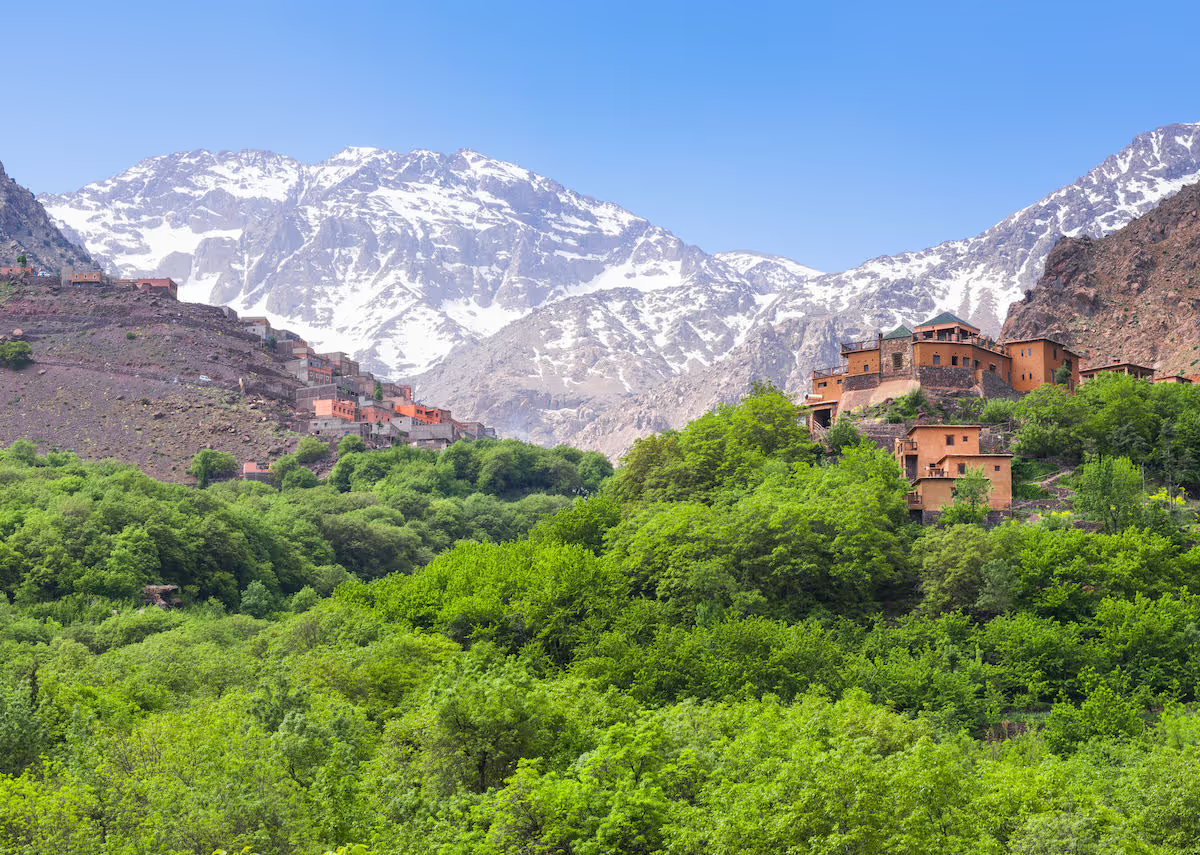
The quieter Morocco: where Atlantic wind meets mountain silence
Morocco’s imperial cities and desert dunes get the headlines. But the country often makes more sense in its quieter places: a coastal town shaped by salt and wind, a mountain medina painted blue, villages where Amazigh (Berber, Morocco’s Indigenous communities) life still runs on its own clock.
Essaouira, Chefchaouen, the Rif and Atlas ranges, and Tangier’s north-facing gaze offer a counterpoint to the intensity of Marrakech and Fes. They’re where you go to breathe. To slow down. To see how geography changes culture.
If you’re the kind of traveller who prefers depth over density, these regions can feel like a relief. Less performance. More daily life. More room for real conversation.
Essaouira: where wind shapes everything
Essaouira announces itself with wind.
The Atlantic trades blow so consistently that they’ve shaped the town’s architecture and temperament. Whitewashed walls edged in blue. Doors that look freshly painted because they have to be. A pace that follows fishing rhythms and long walks rather than itineraries.
This isn’t Marrakech on the sea. Essaouira has its own mood: part working port, part artist town, part place-you-stay-longer-than-planned.
The medina: manageable, walkable, human
Essaouira’s medina is a UNESCO World Heritage Site, and it feels different from most Moroccan old cities. The streets are more grid-like, easier to navigate, less designed to swallow you whole.
The souks are gentler too. People will still call you in, but the energy is softer. You’ll find more artisan work and fewer piles of identical souvenirs.
A note on shopping: you’ll see thuya wood pieces (from the thuya tree, a North African conifer). The grain can be beautiful. Just buy from places that can speak clearly about sourcing and sustainability.
Ramparts, harbour, and the best kind of lunch
The ramparts are Essaouira’s signature: stone walls, cannons pointed seaward, Atlantic light doing what it does.
Then there’s the harbour. Blue boats bobbing. Nets being repaired. Gulls behaving like gulls. If you want to understand the town, come here in the morning.
Lunch is simple: fish grilled straight from the day’s catch, eaten outdoors with bread and harissa (a chilli paste). Not fine dining. Something better: immediate, local, unforced.
Music and art (without the mythology)
Essaouira’s creative reputation is real, even if some of the stories around it aren’t. Hendrix did visit, but the “Hendrix castle” tale is mostly tourist folklore.
What’s true is that the town has long attracted musicians and artists. Gnawa music (a trance-like musical tradition with roots in sub-Saharan Africa and Moroccan Sufi practice) is part of that living culture.
If you’re here in June, the Gnawa Festival brings big energy. Outside festival time, smaller venues can feel more intimate.
Wind, water, and long walks
That constant wind makes Essaouira a serious destination for kitesurfing and windsurfing. Even if you’re not getting in the water, the beach south of town is made for long walks.
Swimming can be bracing (cold water, strong currents). Walking is the real pleasure.
When to go: Essaouira works year-round. Summer is busiest and best for water sports. Spring and autumn are comfortable. Winter is quiet and a little moody.
Chefchaouen: the blue city, properly experienced
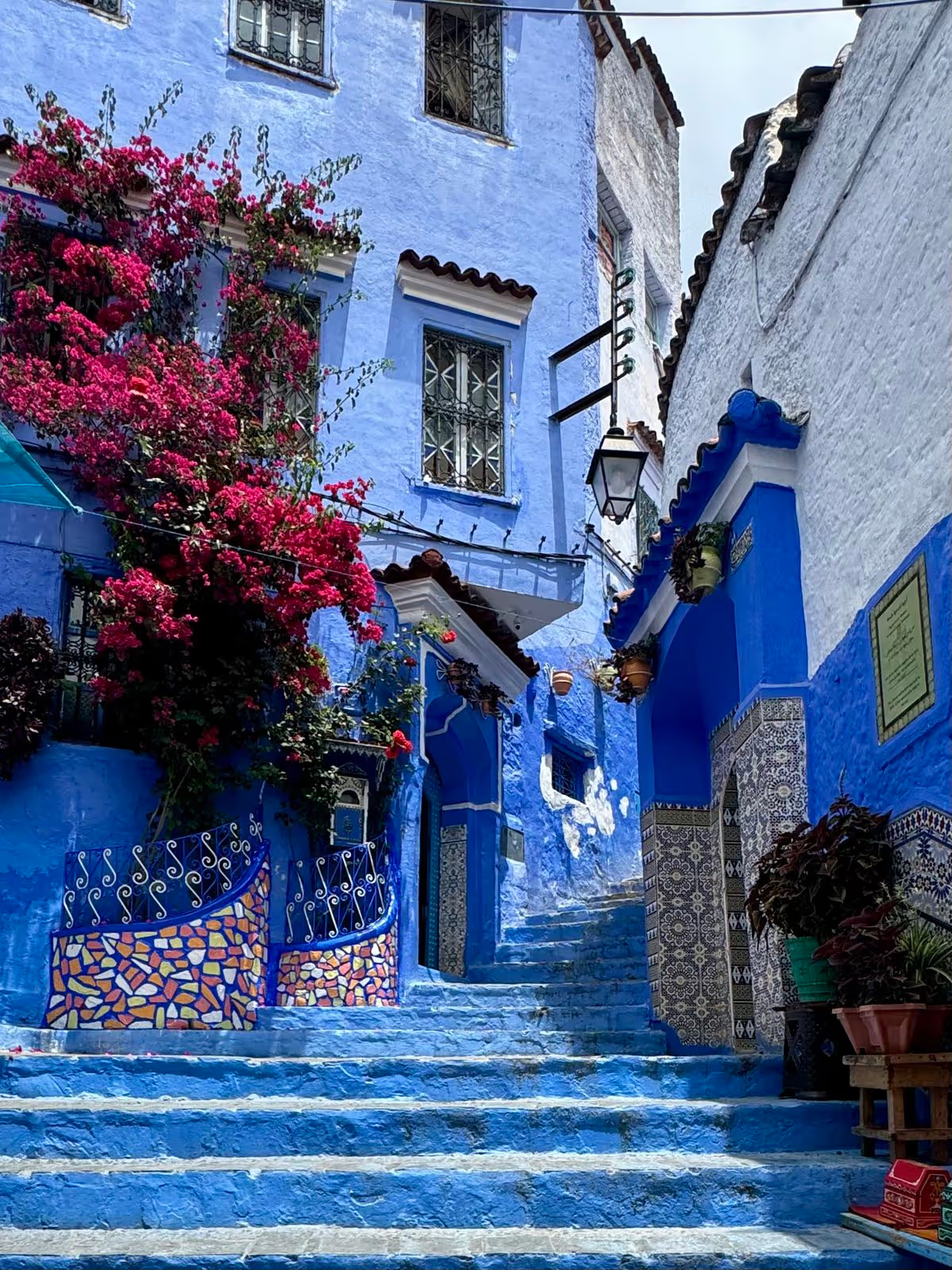
Chefchaouen sits in the Rif Mountains and wears blue without irony.
Almost every wall is painted some shade of it: powder, sky, cobalt, indigo. People will tell you different reasons why — Jewish heritage, insect deterrent, cooling, spirituality. The truth is probably a mix.
What matters is the feeling. The blue changes the temperature of the mind. It slows you down.
Beyond the Instagram version
Yes, Chefchaouen photographs well. But dismissing it as “Instagrammable” misses the point. The town’s compact medina lets you slip away from the main photo spots quickly, into residential lanes where life continues without an audience.
The simplest strategy: stay overnight.
Day-trippers arrive late morning and leave by late afternoon. Early morning and evening, the town belongs to itself again — and that’s when the blue feels most honest.
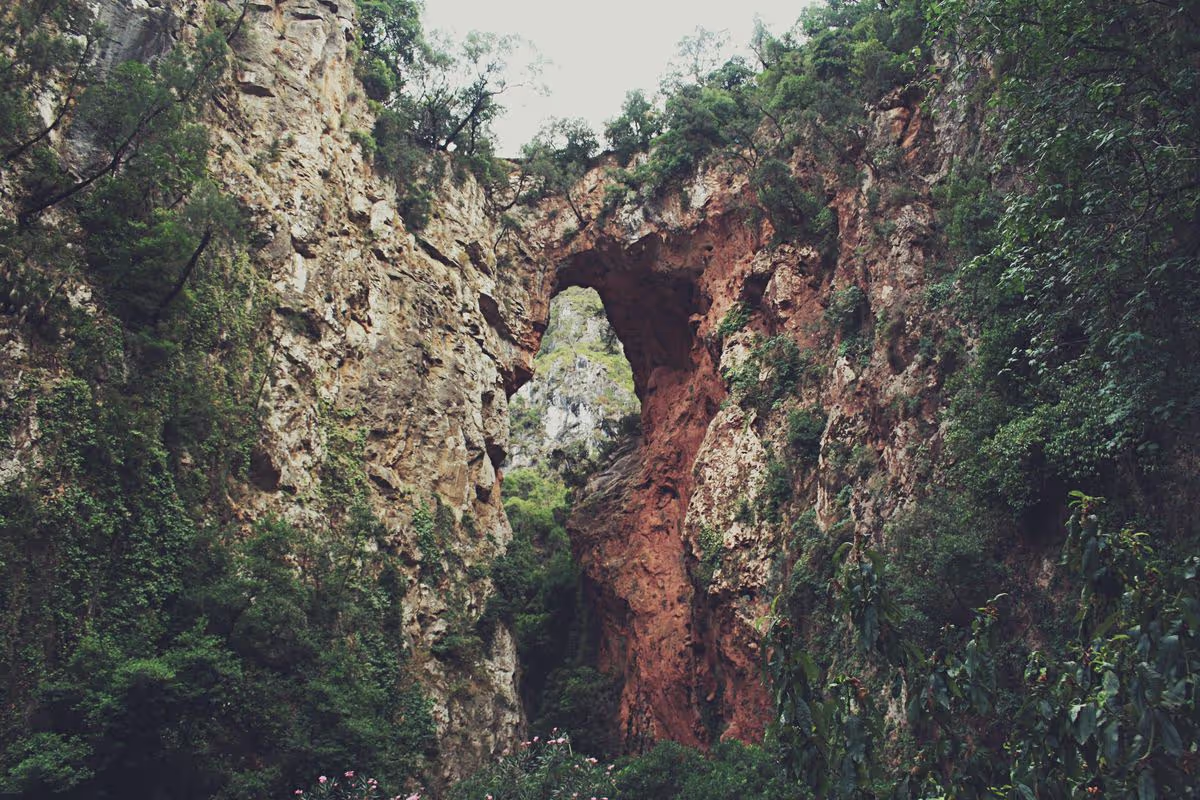
The mountains beckon
Chefchaouen is also a gateway to the Rif.
You can do day hikes to viewpoints above town, or head to Akchour for river trails, pools, and waterfalls. The “Bridge of God” (a natural rock arch) is a longer walk, but it’s a good day if you start early.
The Rif still feels more lightly touristed than parts of the Atlas, and that relative quiet is part of the appeal.
Textiles and women’s cooperatives
Chefchaouen has strong textile traditions. If you buy anything here, buying directly from a cooperative is the cleanest way to support the craft.
You’ll often see the full process: wool preparation, natural dyes, spinning, weaving. A handwoven blanket costs more than a factory version. It should.
Cannabis: a reality check
The Rif is Morocco’s main cannabis-growing region. You will be offered hashish.
Clear guidance: possession is illegal, and tourists do get arrested. The risk is not worth it.
A calm “La, shukran” (No, thank you) is enough. Don’t debate. Don’t explain. Keep walking.
Tangier: Morocco looking north
Tangier sits at a hinge point: Africa and Europe, the Atlantic and the Mediterranean, Morocco and Spain (just 14 kilometres across the strait).
That geography shaped the city’s personality: cosmopolitan, slightly restless, more European-influenced than Marrakech or Fes.
The literary legacy (with a bit of distance)
Tangier’s mid-20th-century writer mythology still hangs around: Paul Bowles, Burroughs, Tennessee Williams. The American Legation Museum captures some of that international-zone strangeness.
Café Hafa is touristy now, but the view is still the view. Go near sunset with mint tea and a little patience.
Medina, kasbah, and everyday city life
Tangier’s medina is less grand than Fes, but it can feel more “real” because it’s less overwhelmed. The kasbah sits above it, with views across to Spain.
Modern Tangier has also reinvented itself: new port, new infrastructure, a more contemporary waterfront.
Tangier works best as an entry or exit point — a day or two to feel the city, then onward.
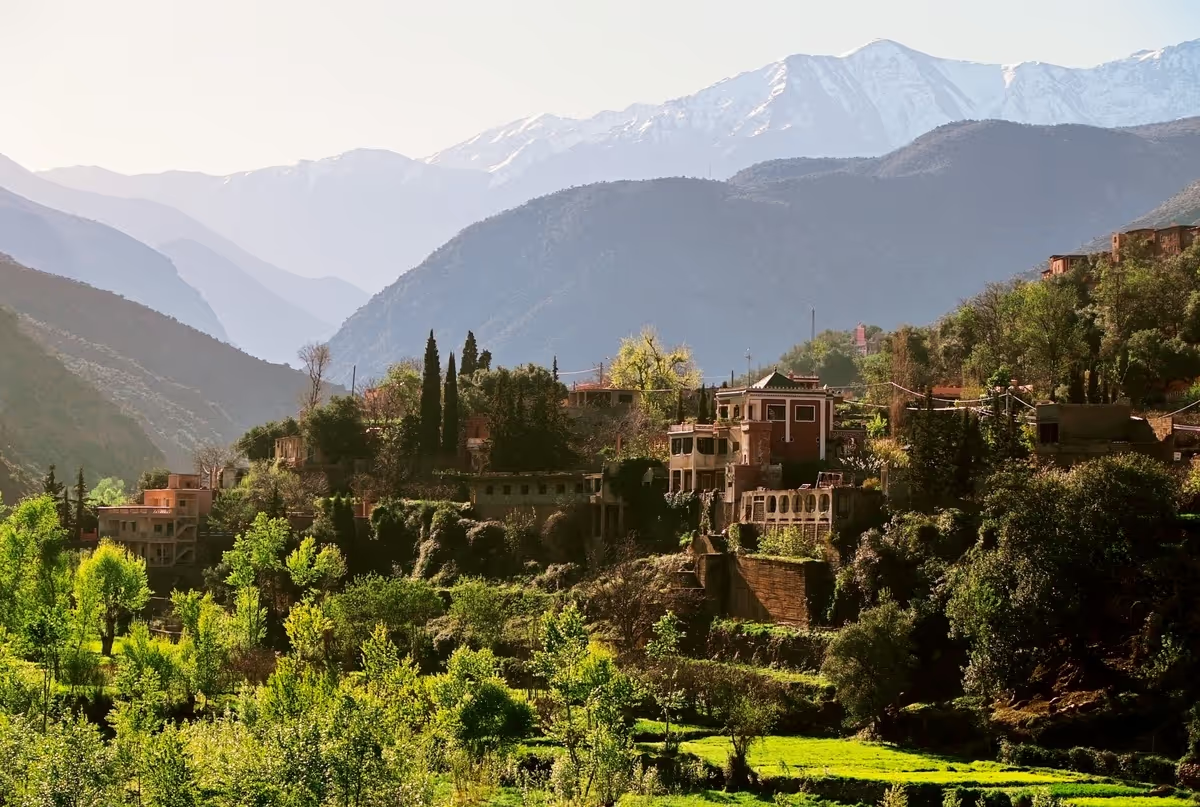
The Atlas Mountains: Amazigh heartland
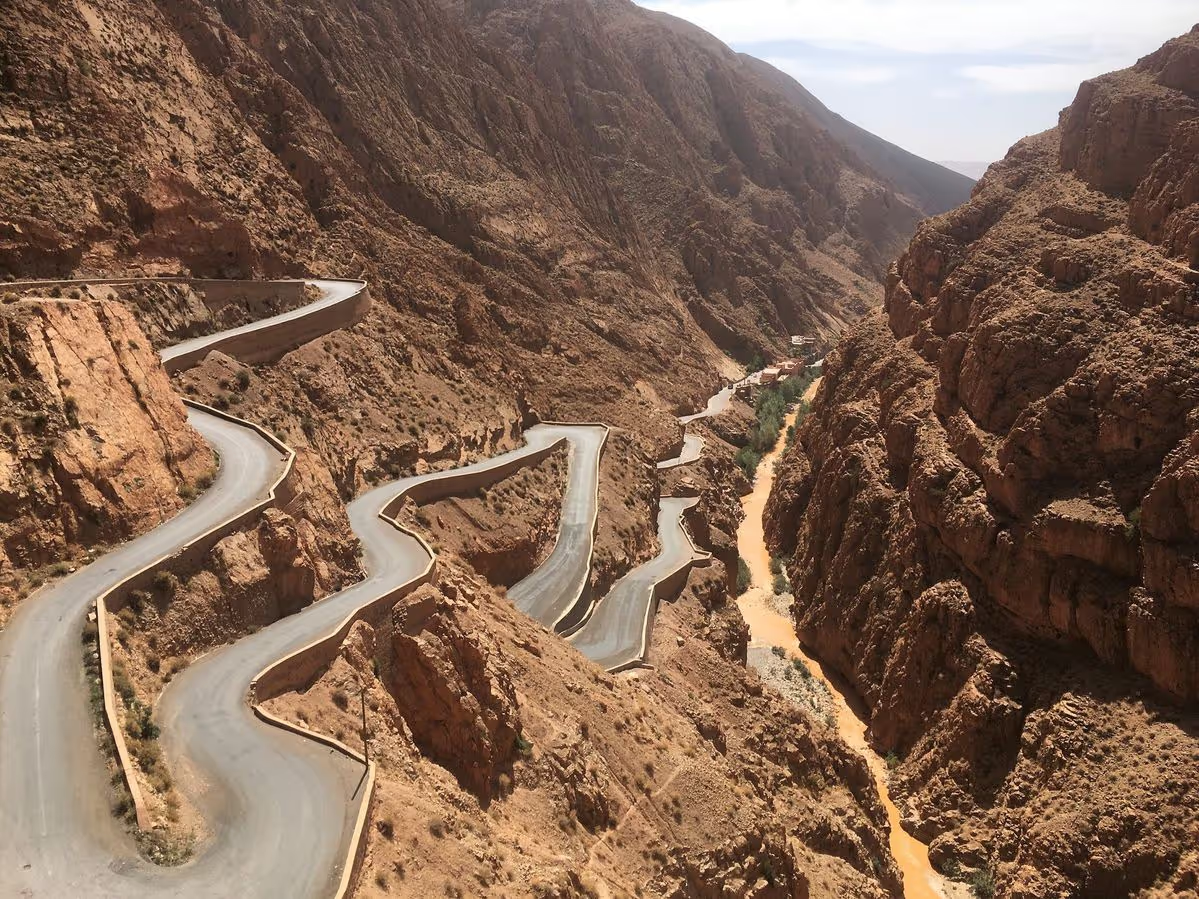
The Atlas ranges form Morocco’s spine. Cities may be majority Arab, but the mountains remain strongly Amazigh in language, culture, and worldview.
High Atlas: Imlil, valleys, and the long walk
Imlil (about two hours from Marrakech) is the classic base for Toubkal (North Africa’s highest peak at 4,167 metres). But you don’t need to summit anything to feel the High Atlas.
Valley walks take you past terraced orchards, stone houses, rushing streams, and villages where hospitality is direct and unshowy.
If you want to go deeper, multi-day treks reveal how quickly the landscape shifts: gorges, green pockets, high passes, snow-capped peaks in season.
Middle Atlas: cedar forests and market towns
The Middle Atlas is less dramatic, but it has its own quiet appeal: cedar forests, spring-fed towns, fewer tourists.
Ifrane can feel oddly alpine (a French-built mountain resort town). The cedar forests near Azrou are beautiful, though the Barbary macaques have become habituated to tourist feeding — best admired without participating.
Weekly souks in market towns are functioning markets, not attractions. If you visit, do it gently.
Practical considerations
- Transport: the coast is easier by road and rail; mountains are best with private transfers for flexibility.
- Seasons: spring and autumn are the sweet spot almost everywhere. Winter can be cold in the mountains. Summer can be hot inland, but the coast stays breezier.
- Accommodation: mountain guesthouses prioritise warmth and hospitality over facilities. Set expectations accordingly.
Why the quieter Morocco matters
These regions give you perspective.
After the intensity of imperial cities and the vastness of the desert, the coast and mountains bring Morocco back to human scale. You can return to the same café. Be recognised. Stay longer because the rhythm suits you.
It’s travel as experience rather than achievement.
Unhotel designs Morocco itineraries that balance the famous with the quieter, and the beautiful with the lived-in. If you want Atlantic light, mountain silence, and places where hospitality still feels like hospitality, we’ll build the route around your pace — and the country’s real diversity.
.avif)
.avif)
Subscribe to stay inspired.
Stories, ideas, and slow journeys - from hidden villages to distant valleys, straight to your inbox.
.avif)