

Marrakech Reimagined: A Guide for the Discerning Traveller
A grounded exploration of Markhaich, Morocco, where everyday rhythms, local craft, and lived traditions reveal the city beyond spectacle, inviting travellers to experience it slowly and from within.

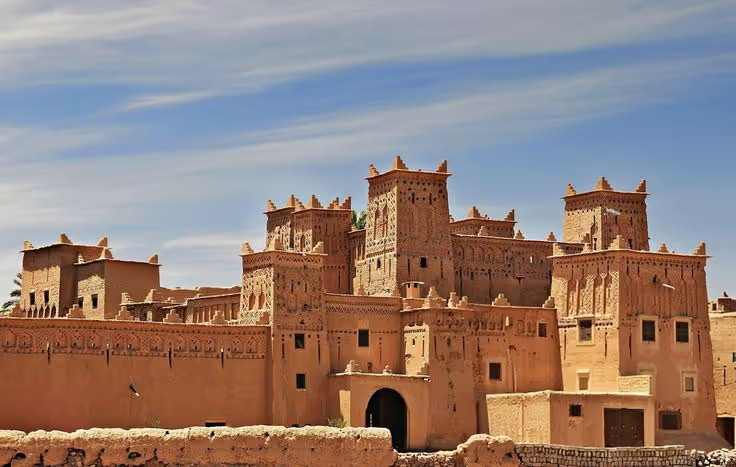
Beyond the souks and snake charmers: discovering Marrakechs layered identity
Marrakech has an image problem. Its too famous for its own good.
The version that travels the world is made of easy scenes: the frenzied souks, snake charmers in Jemaa el-Fnaa, tourists bargaining for babouches, riads reduced to a plunge pool and a pretty courtyard. That Marrakech exists, of course. But its the loudest layer, not the most interesting one.
The real city shows itself slowly. In the Mellahs synagogues, where Moroccos Jewish heritage still has a pulse. In workshops where artisans practise skills handed down like family recipes. In neighbourhood hammams where locals gather for weekly scrubbing and gossip. In gardens where water, shade, and geometry do the quiet work of making a city liveable.
If youve already done the obvious cities Rome, Paris, Istanbul Marrakech offers a different kind of reward. Not monument-hunting, but cultural fusion: Islamic, African, and Andalusian influences meeting and reshaping each other, century after century.
This isnt about avoiding the famous sites. The Koutoubia Mosque and Bahia Palace deserve their reputations. Its about seeing them in context, as part of a living city rather than a checklist.
The medina: learning to read the old city
Marrakechs medina is smaller and more navigable than Fess labyrinth, but it rewards the same patience. The trick is to stop thinking of it as one place. Its a set of neighbourhoods (derbs), each with its own rhythm.
- Northern medina (around Ben Youssef): artisan quarters zellij (mosaic tilework), leather, wood, metal. Less souvenir theatre, more working city.
- The Mellah: the historic Jewish quarter near the Royal Palace, with distinct architecture and active synagogues.
- Gueliz (Ville Nouvelle): wide boulevards, cafés, galleries, boutiques where you meet contemporary Marrakech.
A simple navigation strategy: spend your first day with a good guide who can teach you the medinas logic. How different quarters announce themselves through sound, smell, and craft. After that, explore on your own. Get lost deliberately. The medina is forgiving if you keep one or two landmarks in mind.
Architectural resonances: the Mughal-Moroccan connection
For Indian travellers, Marrakech can feel oddly familiar.
The connection isnt imagined. Moroccan and Mughal traditions draw from shared Islamic architectural ideas that travelled through medieval Persia and across the wider Islamic world.
The Saadian Tombs (rediscovered in 1917) make this easy to see: muqarnas (honeycomb) domes, intricate zellij, calligraphy, marble columns. The same belief that paradise should be built from pattern, light, and proportion.
Bahia Palace carries the parallel further. Courtyards with central fountains. Painted cedar ceilings. Zouaq (painted wood decoration) that rewards slow looking.
The difference is in palette and vocabulary. Morocco leans into ochres, terracottas, deep blues. Mughal India often favours white marble and pietra dura (stone inlay). But the philosophy is close: beauty that serves function, and function that elevates the spirit.
Ben Youssef Madrasa, no longer a functioning Quranic school, remains one of the citys most contemplative spaces. Water, geometry, and shade do what theyre meant to do slow you down.
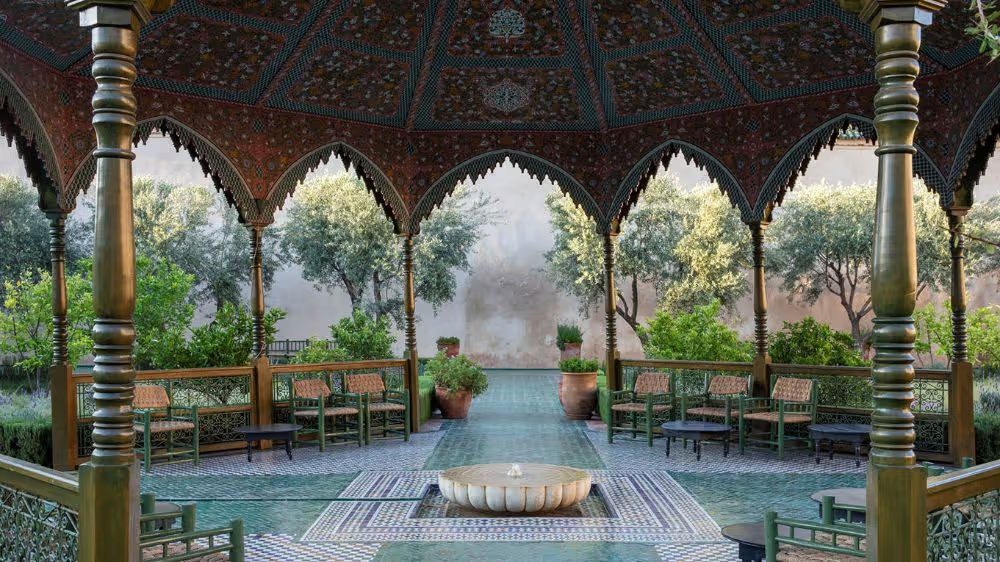
Beyond Bahia: gardens that change the temperature of the day
Marrakechs gardens arent just pretty. Theyre a form of urban survival.
- Majorelle Garden: famous, crowded, still worth it if you go early. The cobalt blue against desert plants is genuinely striking.
- Le Jardin Secret: a restored medina garden that shows traditional Islamic design symmetry, water channels, shade, scent.
- Agdal Gardens: older, more agricultural in spirit, and not always open but when accessible, they show how beauty and productivity coexisted.
If youre used to Lodi Gardens in Delhi, youll recognise the feeling: a city breathing differently behind walls.
The artisan economy: where craft survives commerce
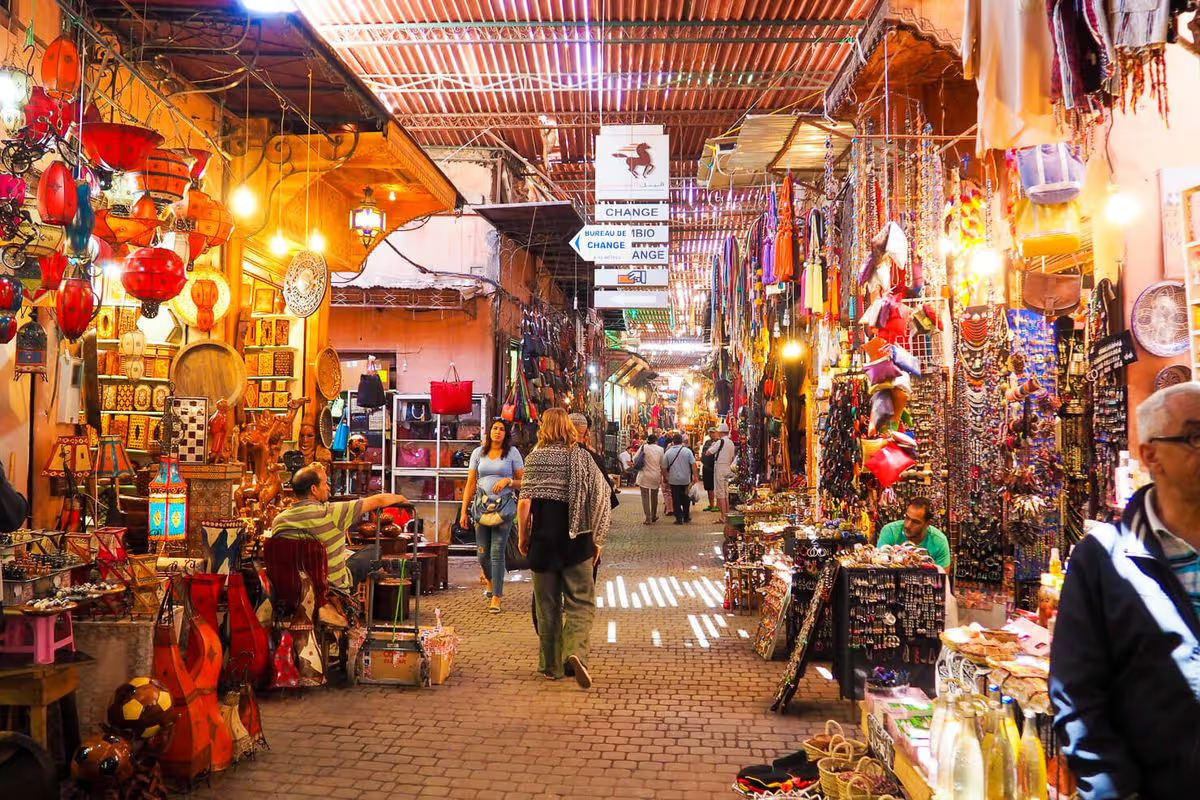
The tourist souks can be a blur of mass-produced handicrafts and aggressive selling. But behind that façade, real workshops still exist.
The key is to go where work is being done, not where its being displayed.
Zouaq painters, for example, work freehand, often on restoration projects. Zellij makers cut and set tiny pieces with a precision that feels almost meditative. In the right places, you can watch without turning it into a performance.
A few ground rules for engaging with artisans well:
- Visit workshops, not just shops
- Understand that time equals value
- Bargain as a cultural practice, not a sport
- Ask about technique and material, not just price
- Support cooperatives and fair-wage workshops when possible
The culinary scene: beyond tagine
Marrakechs food story has moved on from tourist tagines and predictable couscous.
Start with tangia (Marrakechs signature dish): meat slow-cooked in a clay urn with preserved lemon, garlic, cumin, saffron, then left overnight in the embers of a communal oven. Its not a restaurant showpiece. Its a home dish, and it tastes like one.
If you want to go deeper, cooking experiences matter when theyre rooted in neighbourhood markets rather than tourist lanes. You learn what people actually buy, how they season, how they eat together.
For Indian palates, Morocco can feel familiar spice blends, slow cooking, flatbreads but the emotional register is different. Moroccan cooking often builds sweetness where Indian cuisine builds heat: honey with chicken, dates with lamb, cinnamon with vegetables. Its a fascinating shift.
Street food is worth doing, but not as a dare. Look for:
- Bessara (fava bean soup) at dawn
- Sfenj (fresh doughnuts) eaten immediately
- Maakouda (potato fritters) as a quick snack
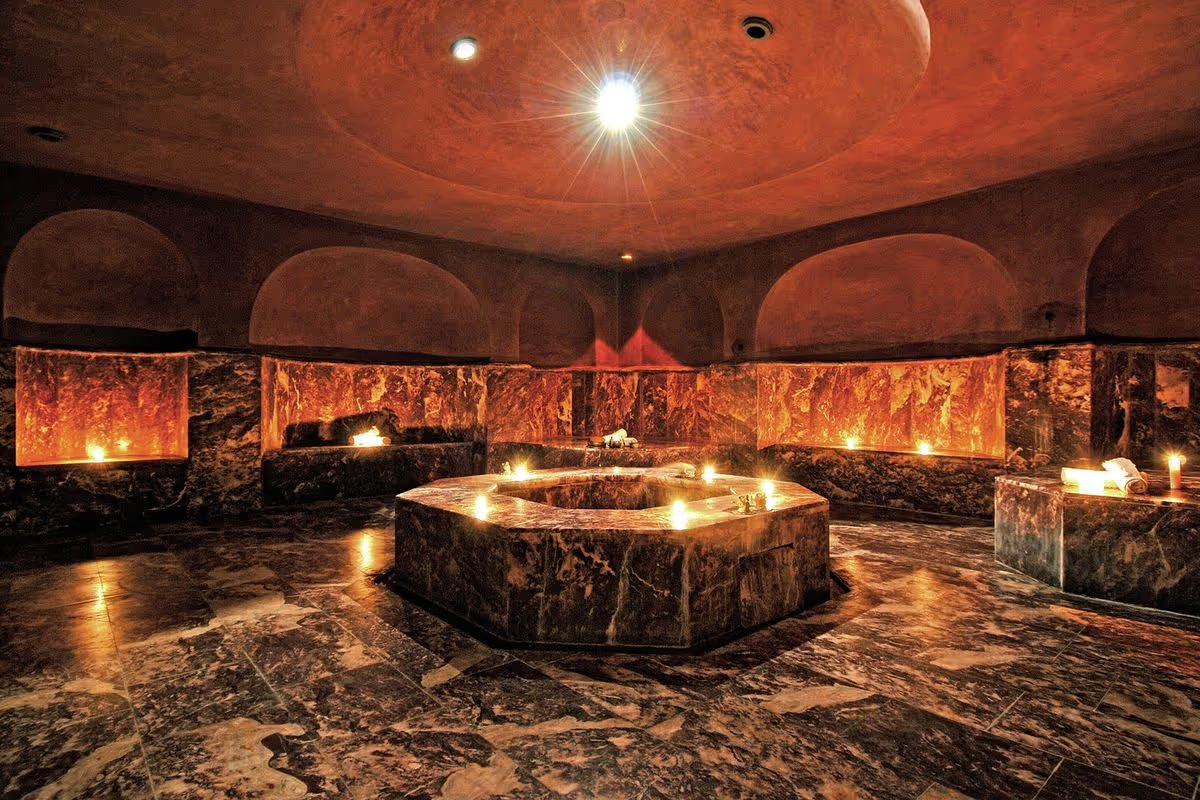
The hammam: ritual and renovation
A hammam is not a spa. Not originally.
Traditional public hammams are still the most honest version: separate sections for men and women, basic facilities, locals doing their weekly wash. You bring your own kessa (scrubbing glove), black soap, and ghassoul (clay) or buy them nearby. The scrubbing can feel borderline violent. Thats the point.
Luxury riad hammams keep the sequence but soften the edges: private sessions, better products, gentler hands, beautiful rooms.
If youre curious, do a traditional hammam once. Then do the refined version for pure relaxation.
Where to stay: the riad evolution
Marrakech pioneered the riad-as-hotel idea. The results range from exquisite to overdone.
What makes a riad genuinely good:
- Location: deep enough for atmosphere, accessible enough to come home without stress
- Architecture: original features preserved, modern comforts added quietly
- Scale: smaller properties feel like homes, not hotels
- People: staff who can guide you away from tourist traps without turning everything into a commission trail
- Food: a great in-house cook can outshine many restaurants
If youd rather skip medina intensity, Gueliz boutique hotels offer contemporary design and easier logistics. Resorts in the palm groves give you pool culture and space. The right choice depends on how you want the city to feel.
Jemaa el-Fnaa: the beating heart (handle with care)
Jemaa el-Fnaa is both wonderful and exhausting.
By day, its manageable: juice stalls, performers, henna artists, snake charmers (with ethical concerns worth discussing). By night, it becomes a smoke-filled outdoor food market and a full sensory assault.
A few practical rules:
- Ignore aggressive touts. Calm repetition works: La, shukran (No, thank you)
- Dont photograph performers without permission (and expect to pay)
- Eat hot food you see being cooked. Be cautious with cold salads
- Watch from a terrace first. Distance helps you understand the spectacle
UNESCO recognises the square as intangible cultural heritage. That matters. Its not just a tourist circus. Its a social centre with a long memory.
.avif)
Contemporary Marrakech: Gueliz and beyond
To understand Morocco as it exists now, spend time in Gueliz.
Youll find galleries, cafés, boutiques, and a young, cosmopolitan crowd. Contemporary Moroccan art is often the most honest window into the countrys layered identity: Islamic tradition, French colonial legacy, Amazigh heritage, global present.
Shopping here is fixed-price and air-conditioned. The trade-off is obvious: less theatre, more ease. Do both. Souks for craft and chaos, Gueliz for modern life.
Day trips that add context
- Essaouira: Atlantic air, seafood, a different rhythm. Doable as a day trip, better overnight.
- Ourika Valley: mountain scenery and cooler air, especially in summer.
- Imlil and Toubkal: for hikers and those who want the Atlas properly, not as a rushed photo stop.
We generally prefer overnights in the mountains. Less time in the car. More time in the place.
Practical wisdom
- Best seasons: spring (March to May) and autumn (September to November)
- Time needed: three full days minimum. Five is comfortable. A week lets you slow down.
Common scams to avoid:
- That place is closed guides who redirect you to commission shops
- Taxi drivers claiming your hotel is full or closed
- Free henna that becomes expensive after its already on your hand
Photography ethics:
- Ask before photographing people
- Dont photograph children without parental permission
- Treat private spaces (hammams, riads) with discretion
The layered city
What makes Marrakech fascinating isnt the chaos every travel article sells. Its the layers.
Andalusian refugees after the Reconquista. Jewish heritage in the Mellah. French planning in Gueliz. Contemporary artists reshaping tradition. All of it visible at once, if you know where to look.
Marrakech doesnt reveal itself in a weekend sprint. It rewards the traveller who slows down, who looks twice, who learns a few words, who doesnt treat every interaction as a transaction.
From here, many travellers go south to the Sahara for silence, or north to Fes for deeper artisan traditions. Some head west to Essaouira for coastal calm, or into the Atlas for mountain hospitality.
The journey matters more than the itinerary. Marrakech teaches that, eventually.
Unhotel designs Marrakech experiences that move beyond surface tourism. We connect you with working artisans in their workshops, arrange meals that feel like hospitality (not a show), and match you with riads that are beautiful without being theatrical. Whether Marrakech anchors your Morocco journey or sits within a wider route, we build it around the citys complexity and your pace.
.avif)
.avif)
Subscribe to stay inspired.
Stories, ideas, and slow journeys - from hidden villages to distant valleys, straight to your inbox.
.avif)