

Granite, Cork, Lineage
Portugal’s wine culture is grounded and expressive, shaped by Atlantic winds, indigenous grape varieties, and family vineyards where tradition, place, and everyday meals remain inseparable.

.avif)
Portugal’s family wine estates, and the terroir they’ve guarded for generations
Portugal produces wine the way most countries produce history, slowly, stubbornly, with families who have been doing the same thing in the same place for so long that asking why can feel faintly ridiculous.
This isn’t Napa’s corporate efficiency or Bordeaux’s inherited theatre. Portugal’s wine culture survived phylloxera, dictatorship, modernisation pressure, and global consolidation by staying small, local, and loyal to land.
The result is a landscape where fourth-generation producers still hand-harvest indigenous grape varieties most of the world has never heard of.
This is not a guide or a checklist, it’s a closer look at estates and winemakers who treat viticulture as cultural preservation.
Douro Valley: where landscape dictates everything
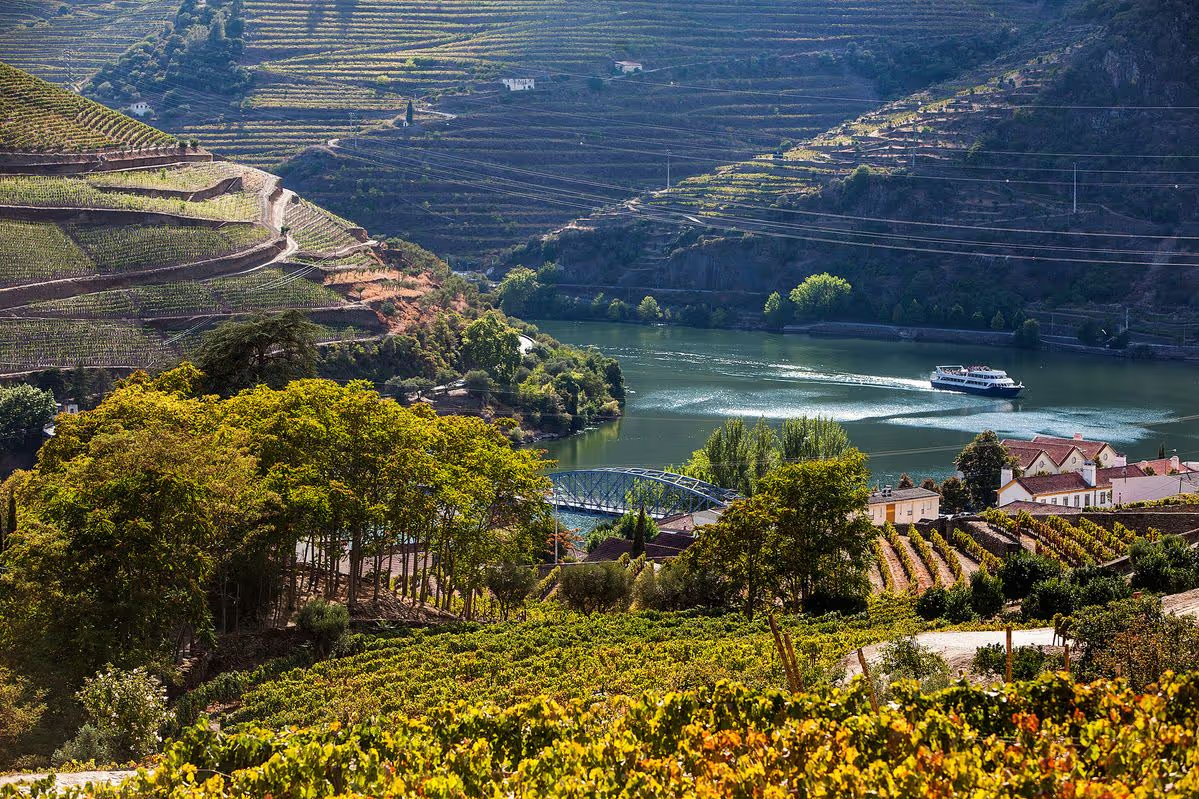
The Douro became a UNESCO World Heritage site not only because of what it produces, but because of what people had to do to the land to make production possible.
Terraces carved into steep schist slopes. Stone walls built without mortar. Vineyards planted at angles that look structurally impossible.
This wasn't an aesthetic choice. It was a geological necessity.
Schist drains brilliantly, but it also makes mechanisation difficult. Harvest remains largely manual. Vineyard maintenance requires people who know which slopes hold and which need constant reinforcement.
That knowledge sits in families.
In the Douro, you begin to understand why capacity is not a marketing decision. It is a physical limit.
Quinta do Vale Meão is a good example. Its wines are sought after, but the estate isn’t trying to become bigger. The family understands that their specific combination of schist composition, microclimate, and elevation cannot be replicated elsewhere.
When you taste with people who have lived through decades of harvests, the conversation shifts.
Not “notes of blackberry”.
Rainfall timing. August heat. September nights. The difference between a good year and a great year.
At Quinta das Carvalhas, the story is slightly different. Old-vine Touriga Nacional planted in the 1950s sits alongside careful experimentation, new training systems, fermentation trials, questions asked inside a traditional frame.
Not abandoning tradition.
Testing which traditions serve the wine, and which serve nostalgia.
Indigenous grapes: Portugal’s quiet advantage
Portugal has more than 250 indigenous grape varieties.
Most are unknown outside the country. That isn’t a weakness. It’s differentiation.
While global markets consolidated around Cabernet Sauvignon, Chardonnay, and Merlot, Portuguese families kept grapes with names like Touriga Nacional, Tinta Roriz, Arinto, and Alvarinho.
These varieties evolved alongside specific microclimates over centuries. They produce flavours that are difficult to imitate elsewhere.
The economic logic was not always obvious. International varieties have proven markets. Indigenous varieties require explanation.
But many families continued anyway, because abandoning these grapes meant abandoning the character their land was capable of expressing.
If you taste across regions, the point becomes clear.
Douro reds taste nothing like Alentejo reds, not only because of climate, but because entirely different grapes dominate each region.
You might come across:
- Encruzado (a Dão white) with surprising ageing potential
- Baga (a Bairrada red) high-acid and structured, loved by sommeliers, ignored by mass markets
- Alvarinho (Vinho Verde’s star) grown near the Spanish border, where the same grape is called Albariño
The names are unfamiliar. The wines are not.
They feel like places.
Alentejo: where cork forests meet wine estates
Alentejo is a different Portugal.
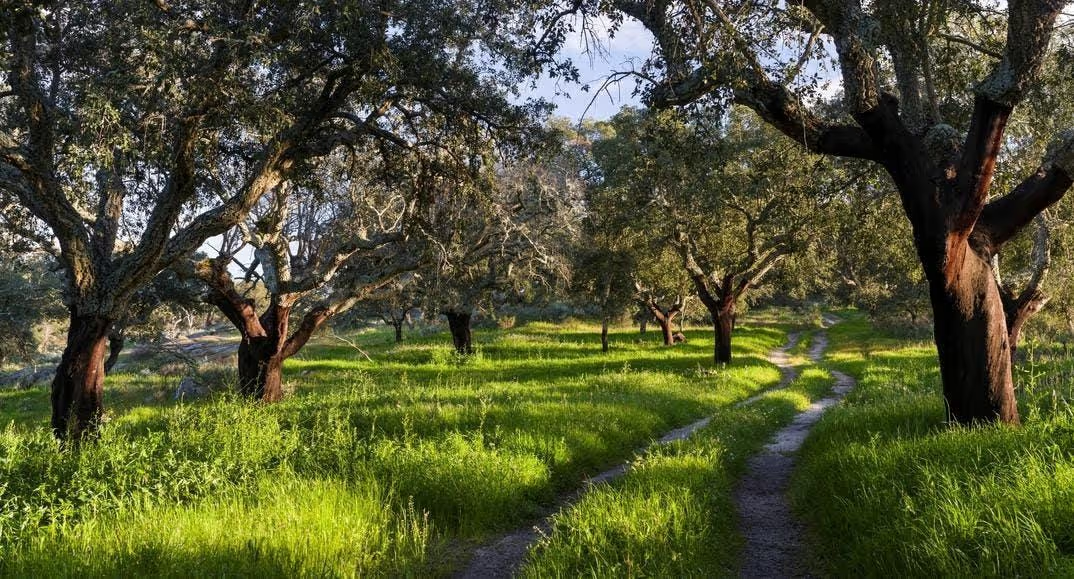
Vast plains. Cork oak forests. Estates measured in hundreds of hectares rather than terraced slopes.
The wine culture reflects that scale. More space. More experimentation. Less constraint from historical vineyard boundaries.
But “larger” here can still mean family-run.
Herdade da Malhadinha Nova, for instance, operates a large estate of vines, olives, and cork forest, with a philosophy that blends commercial production with biodiversity corridors and restoration work.
Cork changes how people think.
A cork oak cannot be harvested until it is around 25 years old, and then only once every nine years. You plant trees your grandchildren will strip.
Wine operates on shorter cycles, but the mindset carries over.
Patient capital.
Generational planning.
A reluctance to optimise for immediate returns.
When cork and wine coexist on the same land, you also see the ecological argument. Cork forests support entire ecosystems. Commercial cork harvesting keeps those forests economically viable.
The wines here tend to be warmer and fuller, but there are surprises.
Freshness from higher altitude sites. Mineral notes from schist outcrops. Aromatic complexity from old-vine field blends where multiple varieties grow intermingled.
Port: the wine that travelled, and stayed
‘Port’ exists because of trade, and a practical problem.
In the seventeenth century, British merchants, blocked from French wine by tariffs and war, turned to Portugal. They discovered that adding brandy to fermenting wine stopped fermentation, preserved sweetness, and survived long voyages.
A preservation technique became a category.
Over time, Port developed strict regulations, geographic boundaries, and classification systems that are more technical than they look from the outside.
Vintage Port that ages for decades.
Tawny Port blended across multiple years.
White Port is rarely seen outside Portugal.
If you taste across styles and years, you start to see why classification is not just branding.
It is an assessment of structure, balance, and ageing potential.
The most revealing Port stories often sit with smaller producers, family operations making a few thousand bottles a year, maintaining single-vineyard production while global brands blend across hundreds of sites.
These wines rarely travel far.
They don’t need to.
Small producers: why scale matters
Portugal’s wine economy depends on small producers in a way many larger regions do not.
A large share of Portuguese wineries produce fewer than 100,000 bottles annually. Many produce under 10,000.
That creates a different kind of ecosystem.
Less tasting-room polish. Less international distribution. More local relationships, restaurant networks, and word of mouth.
It also creates a different kind of wine.
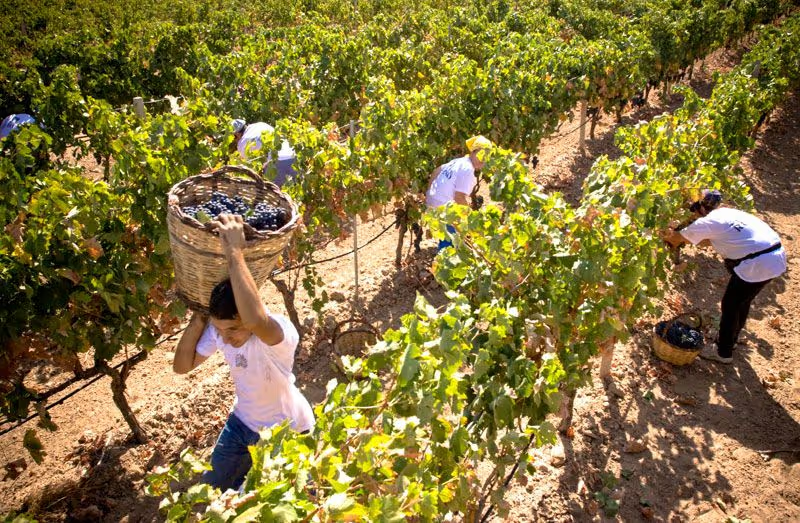
Hand-harvesting allows selection impossible with machines. Small-batch fermentation permits experimentation that larger producers cannot risk. Limited production means a winemaker can taste every barrel, blend with precision, bottle only what meets their standards.
In Portugal, you may meet people who make wine alongside other lives.
Teachers. Engineers. Doctors.
They make wine on weekends because their families have always made wine.
Sometimes the bottles are extraordinary.
Not because they are rare.
Because someone cared enough to keep doing it properly.
Why this approach matters
Portugal rewards depth over breadth.
You can rush through twenty wineries in a week, or spend meaningful time with a handful of families whose knowledge represents centuries of vineyard wisdom.
The second approach gives you more.
The best wine experiences here are not about chasing trophy bottles. They are about understanding why certain places produce certain wines.
Schist composition.
Drainage.
Sun exposure.
Harvest timing.
Families who refused to grub up indigenous vines during standardisation drives.
Winemakers who prioritise quality over quantity even when economics suggest otherwise.
You leave Portugal with a different sense of what wine is.
Not agriculture with better marketing.
Geology expressed through viticulture.
Family history preserved through continuing production.
Regional identity maintained through grapes that exist nowhere else.
For customised wine and cultural itineraries in Portugal:
manish@unhotel.in
.avif)
.avif)
Subscribe to stay inspired.
Stories, ideas, and slow journeys - from hidden villages to distant valleys, straight to your inbox.
.avif)