

Georgia Travel Guide: Sacred Polyphonic Music Beyond the Wine Trails
From Svaneti’s high Caucasus villages to monastery domes, this is Georgia heard through voices that carry memory, faith and resistance.

.avif)
A Voice in the Mountains: My First Georgian Harmony
I arrived in Georgia for the wine. Everyone does. But three days into my first supra feast, something else entirely captured me - voices threading through the mountain air like smoke from ancient fires. No instruments. Just lungs, lineage, and the raw soul of a people weaving melodies that seemed older than the stones beneath our feet.
This was my introduction to Georgian polyphonic singing - a UNESCO-recognized tradition that predates the Georgian Orthodox Church itself. It's not background music for your dinner. It's not a staged spectacle for tourists clutching cameras. It's a centuries-old act of cultural survival, voiced in monasteries, mountain homes, and wine feasts across this ancient land.
If wine is Georgia's liquid poetry, polyphony is its heartbeat. And the initiated travelers - those seeking authentic Georgia travel experiences beyond the obvious - don't come just for the vineyards.
Stay long enough in the right company, and the harmonies will find you. They slip into dinners, into dawn walks through stone villages, into dusky monasteries still echoing with forgotten chants. This isn't music. It's memory, wrapped in sound.
Into the High Caucasus: Ancient Songs of Svaneti
There's no place quite like Svaneti for experiencing authentic Georgian culture. Tucked in the high Caucasus at 2,100 meters above sea level, this remote region's isolation preserved not only those iconic medieval watchtowers but also some of Georgia's most ancient musical traditions.
Svan polyphony isn't the smooth harmony you might expect. It's raw, sharp-edged, layered with linguistic and spiritual grit that cuts through you like mountain wind. Think of it as Georgian blues sung through the teeth of a glacier.
Meeting the Keepers of Memory
In Ushguli (Europe's highest continuously inhabited settlement), I found families like the Pilpanis who've carried oral tradition for generations. They don't read music - they don't need to. Each melodic line lives in memory, shaped in kitchens, barns, and prayer corners where children absorb harmonies like mother's milk.
Travel Tip: The best time to visit Svaneti for cultural experiences is June through September when mountain passes are accessible and families gather for seasonal celebrations. A homestay in Ushguli costs approximately 60-80 GEL ($22-30) per night including meals.
UNESCO recognized something locals already knew - Svan tradition represents one of the most archaic branches of Georgian polyphony, rooted in pagan harvest rites that Christianity absorbed rather than replaced.
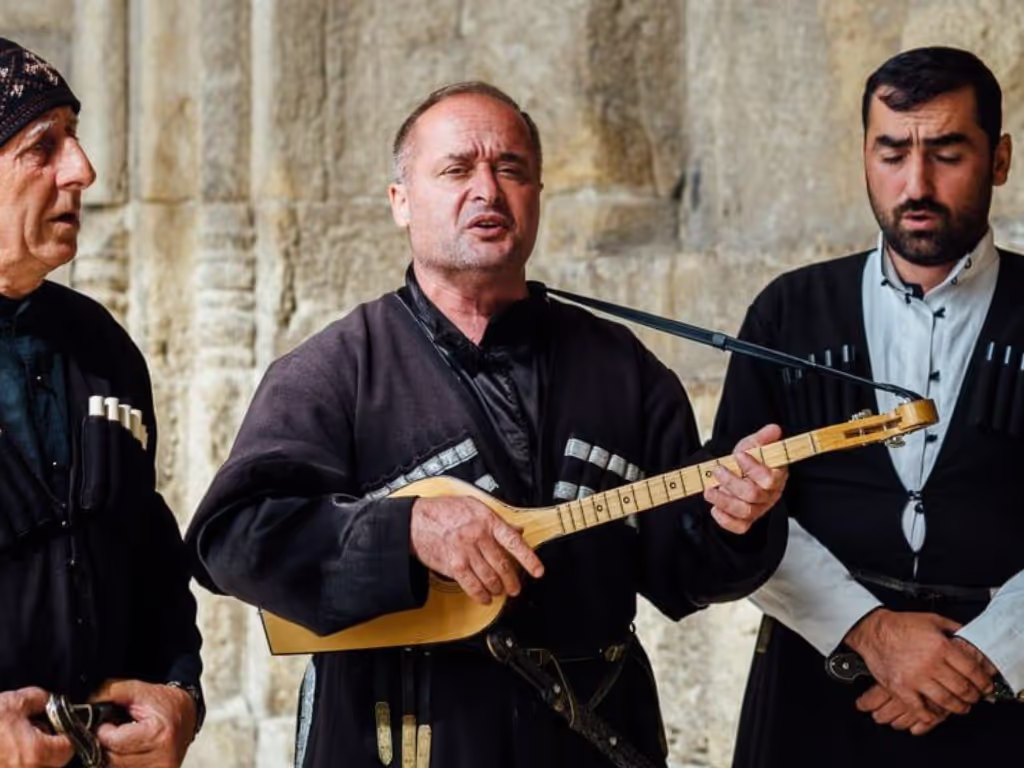
What struck me most: Svan singers often don't perform facing their audience. They face each other, eyes locked, as if the harmony is a sacred pact rather than entertainment. One voice begins like a prayer, another snakes underneath like mountain stream, and a third wraps above like smoke from village chimneys.
For Unhotel Travelers: We arrange intimate evenings with Svan families where music emerges naturally - no microphones, no stage, just voices and stone walls that have heard these songs for centuries.
Sacred Chants at Gelati: Stone, Echo, and Spirit
Back in western Georgia near Kutaisi, the 12th-century Gelati Monastery holds a different kind of silence - the anticipatory hush before sacred chant begins. Founded by King David the Builder, this UNESCO World Heritage Site isn't just Byzantine architectural marvel; it's a living laboratory of sacred polyphony.
The Architecture of Sound
The acoustics here are nothing short of phenomenal. Professional choirs journey from Tbilisi specifically for Gelati's divine echo. The cathedral's cavernous dome catches voices mid-air and weaves them into something larger than the sum of their parts.
When to Visit: Sunday morning services (10 AM) offer the most authentic experience. Entry is free, but modest dress is required. The Ensemble Basiani occasionally performs here - their concerts are announced on the monastery's Facebook page.
The chants sung here represent Georgia's three-branched polyphonic legacy: church music, folk songs, and table songs. At Gelati, the sacred meets sonic geometry in ways that make your spine tingle. Time slows. Every footstep echoes like prayer bells. The air itself seems to pause and listen.
These aren't soothing hymns designed to comfort. They're awakening calls, voices reaching toward something beyond the visible world.
Masters of the Unwritten Song: Learning from Living Archives
In Georgia, musical tradition isn't printed in books gathering dust. It's passed from breath to breath, generation to generation.
The Oral Tradition Lives On
You won't find sheet music in a Svan household or a monastery scriptarium. Georgian polyphony exists as living culture - an aural lineage passed from uncle to nephew, grandmother to granddaughter. Master singers like those in Tbilisi's Basiani Ensemble or rural patriarchs in mountain villages are more than performers. They're walking libraries of sound.
I attended workshops where international students sit with these keepers of memory, trying to match pitch and cadence through listening alone. It's humbling work. Preserving this form through oral transmission has become almost patriotic - an act of cultural resistance in our digital age.
Learning Opportunities: The International Research Center for Traditional Polyphony at Tbilisi State Conservatoire offers summer workshops (July-August) for serious students. Cost: approximately $300 for a week-long intensive.
Singers learn to listen more than they vocalize. To wait, absorb, mirror the exact syllables and emotional inflections of the generation before them. A song isn't just notes and rhythm - it's the spaces between sounds, the breath patterns that carry meaning.
.avif)
The Georgian Soul in Three Voices: Understanding the Structure
What makes Georgian polyphony so distinctive isn't just its age - it's the revolutionary approach to harmony itself.
Beyond Western Musical Logic
This isn't Western harmony where dissonance resolves into comfort. Georgian polyphony uses tension as emotional language, not musical error. Most traditional songs weave together three distinct voices:
- Bass drone (krimanchuli) - the foundation, often wordless
- Middle harmonizer (meore khmani) - carries the melody
- High improvisation (kvediteli) - spirals above like incense smoke
This layered format mirrors Georgian identity itself - complicated, resilient, beautifully unresolved. The tradition stretches across life's entire emotional spectrum: laments for the dead, warrior songs, lullabies that teach children history, and sacred hymns that bridge earth and heaven.
What Other Travel Blogs Won't Tell You: Under Soviet rule, polyphonic music was monitored and sometimes repressed as nationalist expression. But it survived in whispers, in mountain villages, in church basements. Today's revival represents both artistic renaissance and political statement.
The songs don't aim to comfort your ears. They aim to confront your heart, carving emotion directly from mountain air.
Where to Listen (and Where Not To): Insider's Guide
Here's the practical question every sophisticated traveler asks: where can one experience authentic polyphonic singing without falling into tourist traps?
Authentic Experiences
The Supra Table - Your best bet remains the traditional Georgian feast where songs flow as naturally as wine. When a tamada (toastmaster) raises his glass, listen for the pause that follows. That's when voices rise.
Confirmed Venues for Quality Performances:
- Gelati Monastery (Kutaisi) - Sunday services, 10 AM
- Ensemble Basiani concerts - Tbilisi State Philharmonic Hall (check schedule at basiani.ge)
- Family wineries in Telavi and Ambrolauri - evening tastings often include spontaneous singing
- Anchiskhati Basilica (Tbilisi) - Saturday evening vespers
Price Range: Monastery visits are free; concert tickets 15-40 GEL ($6-15); winery experiences 50-100 GEL ($18-37) including wine and food.
What to Avoid
Skip the folklore restaurants in Tbilisi's Old Town where singers wear costumes and use microphones. True polyphony demands intimacy and attention - elements impossible to manufacture for tour bus crowds.
The most magical moments happen at family tables where singing begins without announcement or fanfare. That's when you know you've heard something real.
.avif)
Revival in the Blood: The Youth Movement
Georgia's young generation refuses to let polyphony become museum piece.
New Voices, Ancient Songs
Thanks to institutions like Tbilisi State Conservatoire, emerging singers are picking up their ancestors' tones with remarkable dedication. Young ensembles like Iberi and Didgori perform not only in rural villages but at international festivals across Europe and North America.
Even beyond Georgia's borders, choirs like Kitka (California) and folk schools in Norway collaborate with Georgian masters. The Basiani Ensemble, which tours globally, mentors rising talent through master classes and workshops.
For Culture-Seeking Travelers: The annual Tbilisi Folk Festival (September) showcases both traditional masters and innovative young artists. It's an ideal time to witness this cultural transmission in action.
This revival isn't academic nostalgia. For young Georgians, harmonizing represents resistance against cultural homogenization - a way of holding onto something authentic in a world that homogenizes too quickly.
Of Wine and Harmony: Ritual in the Supra
Now we return to wine - not as tourist attraction, but as sacred communion where Georgia's soul reveals itself.
The Heart of Georgian Hospitality
At every proper supra, song follows toast like sunrise follows dawn. After each speech by the tamada, there's a contemplative pause - a collective breath - then music. The most famous of these table songs is Chakrulo, so powerful NASA chose it for the Voyager Golden Record in 1977, humanity's mixtape for the cosmos.
Supra Etiquette for Visitors:
- Never refuse a toast - it's considered disrespectful
- Don't interrupt the tamada's speeches
- When singing begins, listen rather than photograph
- Expect the evening to last 4-6 hours minimum
These songs serve multiple sacred purposes: celebration, mourning, blessing, remembrance. Wine and harmony become extensions of the same impulse - human connection that transcends ordinary conversation.
Unhotel's Recommendation: We arrange authentic supra experiences with Georgian families rather than commercial venues. These intimate gatherings offer genuine cultural exchange where polyphony lives as it was intended - imperfect, improvised, utterly alive.
.avif)
Planning Your Georgian Polyphony Journey
Best Travel Times
- Peak Season: May through October for mountain access
- Cultural Calendar: September (harvest festivals), Christmas season (sacred music focus)
- Budget Season: November through March (limited mountain access but excellent monastery experiences)
Essential Inclusions
- Minimum 2 nights in Svaneti region
- Gelati Monastery visit (combine with Kutaisi exploration)
- At least one authentic supra experience
- Tbilisi conservatory workshop or concert
What Unhotel Offers
As Georgia travel specialists, we curate journeys that go beyond wine tours to reveal this nation's musical soul. Our local partnerships provide access to family supras, master classes with traditional singers, and mountain village homestays where polyphony lives as daily practice rather than performance.
More Than a Melody: The Deeper Journey
To hear Georgian polyphony for the first time is to feel slightly undone, like discovering a secret room in a house you thought you knew. It doesn't resolve the way your ears expect. It climbs, shimmers, creates beautiful tension - then rests in places that surprise you.
This music isn't background to your travel experience. It becomes the foreground, demanding something of your attention and heart that conventional tourism never touches.
For travelers seeking experiences that transform rather than merely entertain, Georgian polyphony offers entry into cultural depths that few destinations can match. In Svan towers and Gelati domes, in shared bread and shared song, in harmonies that hold both ancient history and living heartbeat.
Georgia doesn't just sing. It harmonizes - with its past, its landscape, its people. And if you listen carefully, you might find yourself harmonizing too.
.avif)
Frequently Asked Questions
Q: Do I need musical background to appreciate Georgian polyphony? A: Absolutely not. The emotional impact transcends musical training - many visitors describe it as their most moving cultural experience in Georgia.
Q: Can I learn to sing Georgian polyphony during a visit? A: Basic participation is possible at workshops, but mastery requires years. The joy lies in listening and attempting rather than perfecting.
Q: How does this differ from other world music traditions? A: Georgian polyphony's use of dissonance as emotional expression and its three-voice structure make it unique among world musical traditions.
Q: Is this experience suitable for families with children? A: Children often respond powerfully to polyphonic music. Many performances welcome young listeners, though monastery visits require respectful behavior.
Related Reading:
- UNESCO: Georgian Polyphonic Singing
- Georgia Travel - Official Tourism
- MyGeoTrip - Georgian Cultural Heritage
- Georgian Polyphonic Singing History
Planning an authentic Georgian cultural journey? Unhotel's Georgia specialists design bespoke itineraries focusing on musical heritage, traditional crafts, and intimate cultural encounters. Contact us for personalized recommendations.
.avif)
.avif)
Subscribe to stay inspired.
Stories, ideas, and slow journeys - from hidden villages to distant valleys, straight to your inbox.
.avif)