

Fes, Morocco: A City That Still Makes Things By Hand
A deep dive into the cultural capital of Morocco, fes and its extravagant culture and civilizational strength it has.

.avif)
Where Morocco’s oldest imperial city rewards travellers who slow down
There’s a moment in Fes, usually day two or three, when you stop trying to “do” the medina and start letting it do you.
It might be in a zellige workshop (hand-cut mosaic tilework), watching an artisan split glazed tiles with a small chisel and a practised wrist. Or in a hammam (traditional bathhouse), where heat, steam, and a firm scrub make the modern world feel briefly irrelevant. Or simply in the lanes of Fes el-Bali (the old medina), when you accept that getting a little lost is part of the city’s design.
Fes is not a place you skim. It’s a place you learn. Not through museums, but through living craft, daily prayer calls, and a kind of hospitality that still treats the guest as a responsibility.
If you’ve wandered the haveli lanes of Rajasthan or spent time in Varanasi’s textile markets, you’ll recognise the feeling. Not the details, but the respect for craft. The belief that beauty has purpose. The quiet pride of people who still know how to make things properly.
What makes Fes essential isn’t any single sight. It’s the cumulative weight of a city where the old world never disappeared. It simply kept going.
Why Fes should anchor your Morocco itinerary
Marrakech gets the spotlight. Casablanca gets the flights. Fes holds the spine.
Founded in 789 CE, it has spent over a thousand years perfecting life inside medina walls. The scale is hard to picture until you’re inside it: lanes that twist, fold, and narrow into passages where donkeys still do the work of vehicles.
You come for the icons, yes. But you stay for the daily life around them. A terrace at sunrise. A spice seller measuring by instinct. A craftsman who still knows the old proportions.
For Indian and NRI travellers, Fes carries a familiar logic. Craft is inheritance. Hospitality is duty. Architecture is devotion made visible. You see it in the carved screens, the courtyards, the way a home is designed to hold quiet.
Best time to visit Fes: spring (March to May) and autumn (September to November) for comfortable walking weather. Summer can be hot inside the stone lanes. Winter is cooler with occasional rain, and fewer travellers.
The tanneries: where leather becomes real
The Chouara tannery announces itself before you see it. The smell is strong enough that someone will offer you mint to hold near your nose.
From the terraces above, it looks like a medieval painting: stone vats filled with dyes in ochre, indigo, saffron, and rust. Men stand waist-deep, working hides by hand. It’s visceral. It’s uncomfortable. It’s also honest.
This is what craft looks like before it becomes “pretty”. Before it becomes a handbag in a boutique.
The process is old, organic, and labour-heavy. It’s also why the leather here can feel different, softer, deeper in colour, built to last.
Practical note: visit in the morning when the work is most active and the light is best. Go with a guide who can explain what you’re seeing and help you navigate the shop terraces without pressure.
Fes el-Bali: getting lost is part of the design
Fes el-Bali is one of the world’s largest car-free urban areas. GPS helps, until it doesn’t.
The lanes are narrow enough to brush both walls. Donkeys carry gas cylinders and lumber. Handcarts move like they own the street. Mopeds appear from corners that feel physically impossible.
You’ll hear “balak” (watch out) before you learn how to step aside.
This isn’t a preserved site. It’s a living city. Children run to school. Bread rounds move towards communal ovens. People shop, argue, laugh, and get on with the day inside an architecture designed for another century.
There is a grammar to the chaos. Smoke and grilling means food. Metal-on-metal means coppersmiths. Textiles hanging from windows means you’ve drifted towards the dyers.
We recommend a private guide for the first day or two. Not to keep you on a set path, but to teach you the medina’s logic. After that, you can wander with more confidence.
The artisan workshops: living craft, not a performance
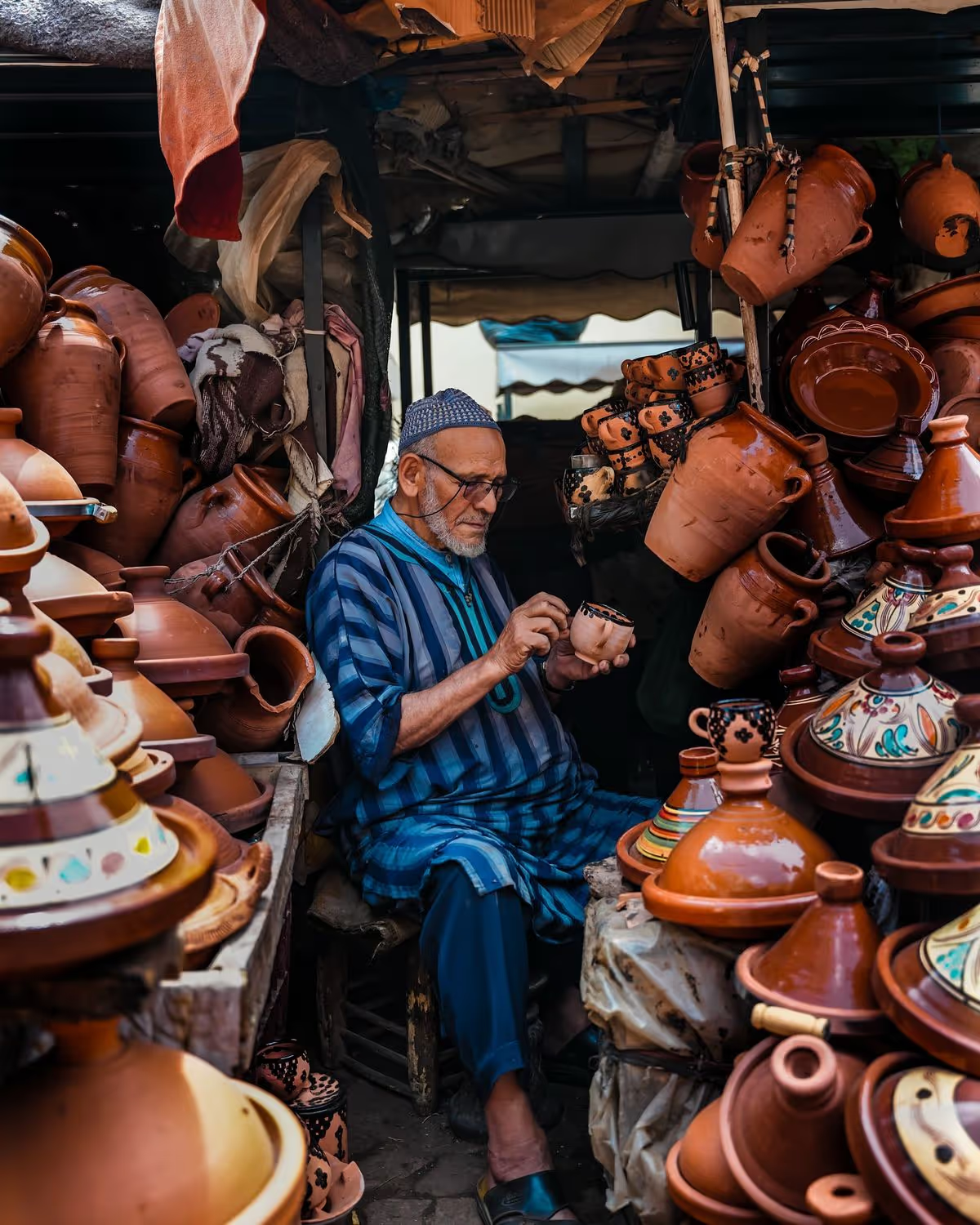
In a workshop the size of a bedroom, a zellige maker cuts tiles into geometry with a chisel and a practised eye. No drama. No show. Just work.
The pieces are assembled face-down, glued in mirror image, then flipped so the pattern appears all at once. It’s a small act of magic built from patience.
Fes runs on an artisan economy India will recognise: carpenters, metalworkers, leather-workers, weavers, and woodcarvers working in family trades.
Tradition survives here because it evolves. Motifs change. Proportions hold. The hand stays the same.
If you want to go beyond the obvious, we arrange visits to working ateliers where you can sit, watch, ask questions, and understand what “handmade” actually means.
The hammam ritual: heat, scrub, and reset
After a day in the medina, a hammam can feel like a reset.
The sequence is simple and old. Warm room. Hot room. A vigorous scrub with a kessa glove (exfoliating mitt) until the skin rolls away. Then ghassoul (mineral-rich clay) for hair and body. Finally, argan oil (pressed from the argan nut) for the softer finish.
Public hammams are still used by locals and can feel intense if you’re not used to communal spaces. Many travellers prefer a private hammam inside a good riad, where the ritual stays traditional but the setting is calmer.
For Indian travellers familiar with abhyanga (Ayurvedic oil massage) or temple tank baths, the philosophy will feel familiar: cleaning the body as a way of clearing the mind.
Al Quaraouiyine: the medieval mind, still present
Al Quaraouiyine was founded in 859 CE by Fatima al-Fihri. It’s often described as the world’s oldest continuously operating university.
Non-Muslims cannot enter the prayer hall, but you can stand at the threshold and look into courtyards where zellige creates repeating geometry.
If you’ve studied the jali screens of Fatehpur Sikri or the inlay of the Taj, you’ll recognise the shared idea: mathematics as meditation. Geometry as devotion.
This intellectual tradition didn’t vanish. It moved into the medina’s workshops, where knowledge still passes from master to apprentice, hand to hand.
Fassi cuisine: eating like you mean it
In Fes, the best meals are rarely the most advertised.
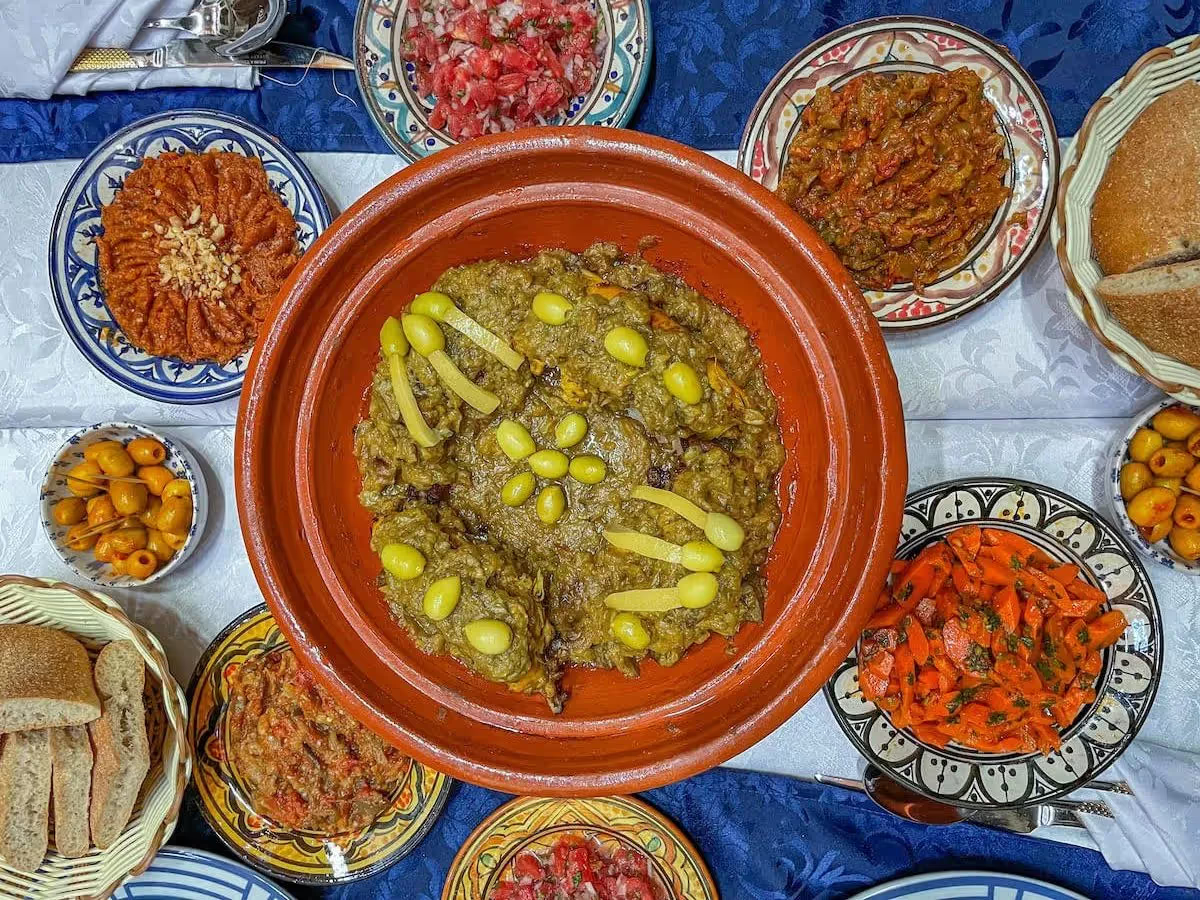
You’ll find them in homes, in small places locals return to, or in riads where the cook is making dishes the way they were taught.
Fassi cuisine takes time. Bastilla (a savoury-sweet pie wrapped in warqa pastry, often filled with chicken or pigeon, almonds, and cinnamon). Rfissa (shredded msemen flatbread layered with chicken and fenugreek sauce). Tagines that build flavour slowly, not loudly.
Indian palates often love Morocco because the spices feel familiar, but the balance is different. Less heat. More sweet against savoury. Preserved lemon cutting through richness.
If you can, do one meal with a local family. Shop together. Cook together. Eat slowly. It teaches you more than any “top restaurants” list.
Don’t miss harira (tomato, lentil, and chickpea soup), sfenj (Moroccan doughnuts), and chebakia (sesame cookies soaked in honey).
Where to stay in Fes: the riad proposition
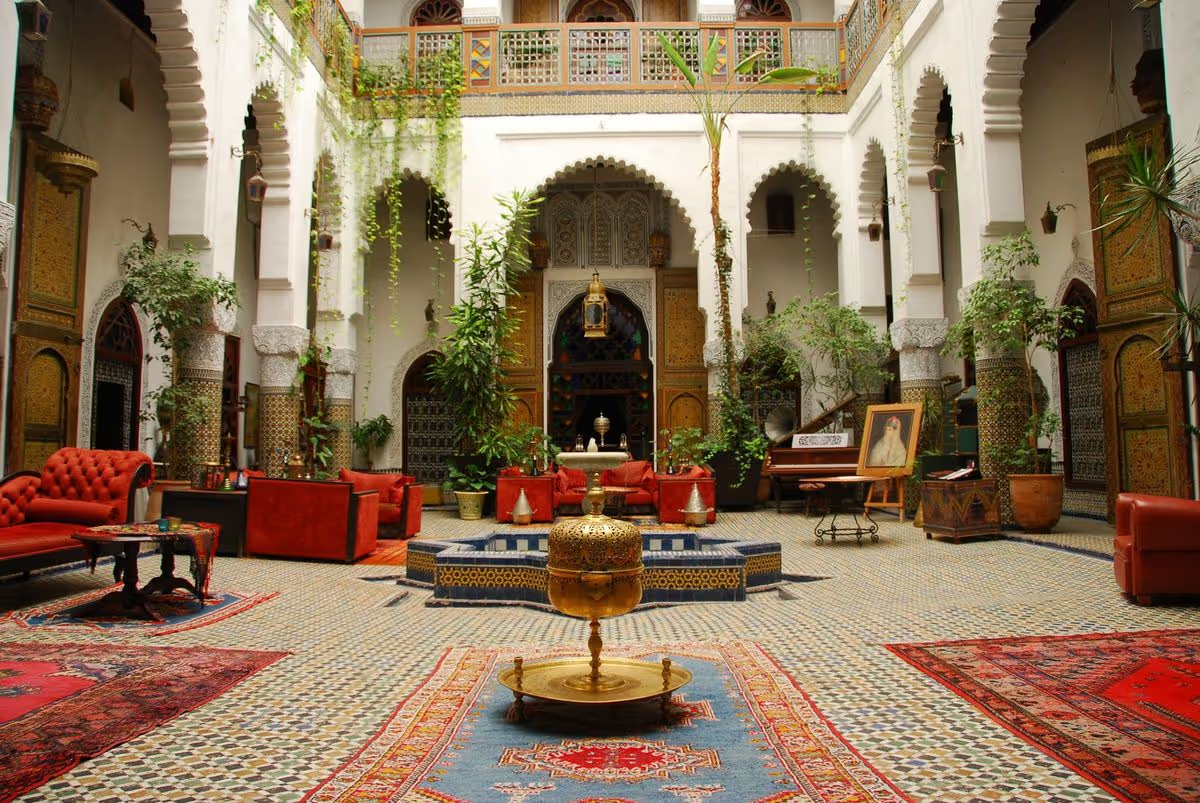
A riad is a traditional Moroccan home built around an interior courtyard.
The best ones feel like a private pause button. Carved cedar ceilings. zellige underfoot. A fountain in the centre. Six to eight rooms. Quiet staff who know the medina well.
The magic isn’t a rooftop bar. It’s the moment the door closes behind you and the noise drops away.
Location matters. Near Bab Boujloud (the Blue Gate) is convenient but busier. Deeper inside the medina feels more immersive, but requires comfort with navigation.
Day trips from Fes: Volubilis and Moulay Idriss
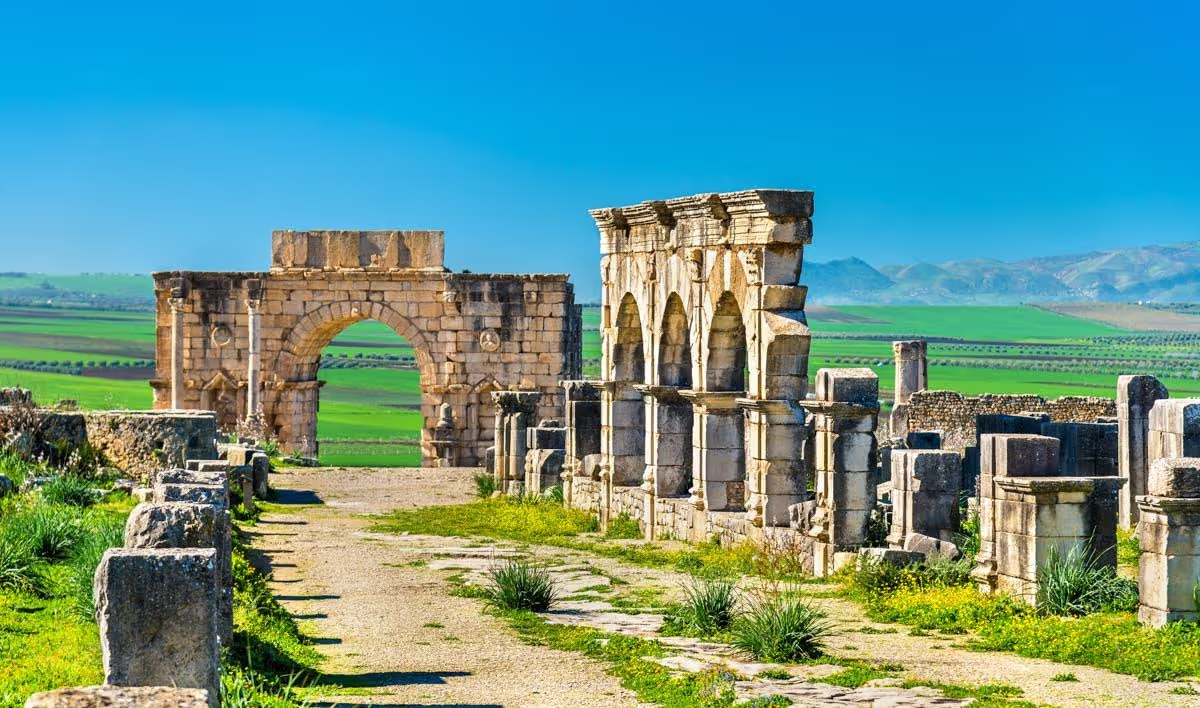
Volubilis is one of North Africa’s best-preserved Roman sites, set across a fertile plain. Its mosaics still hold colour. Its arches still frame distant hills.
Nearby, Moulay Idriss is Morocco’s holiest town, built around the mausoleum of Moulay Idriss I. It remains primarily a place of pilgrimage, so your presence should be quiet and respectful.
Together, they show Morocco’s Roman past and Islamic present in a single day.
Planning your visit: a few practical notes
How long to stay: three full days lets you explore the medina, visit workshops, and do a hammam without rushing. Add a fourth day for Volubilis and Moulay Idriss.
What to pack: comfortable walking shoes with grip. Modest clothing (covered shoulders and knees) helps you blend in and shows respect. A small day bag for purchases.
Language: Arabic and French are most common. English is spoken in riads and tourist areas, less so in workshops. A few polite phrases go a long way.
The deeper truth about Fes
Fes stays with you because it’s still a working city.
The university still teaches. The tanneries still smell like labour. The lanes still run on medieval logic. And the craftsmen still turn raw material into something you’ll carry home for years.
If you’re planning Morocco and want Fes to feel like more than a day trip, we can help you do it properly. The right riad, the right pacing, and access that comes from relationships, not just reservations.
.avif)
.avif)
Subscribe to stay inspired.
Stories, ideas, and slow journeys - from hidden villages to distant valleys, straight to your inbox.
.avif)