

Broth, Bread, Memory
Vietnamese cuisine is built on balance and freshness, where herbs, broths, and everyday street dishes reflect regional landscapes, seasonal rhythms, and a culture shaped as much by restraint as by flavour.

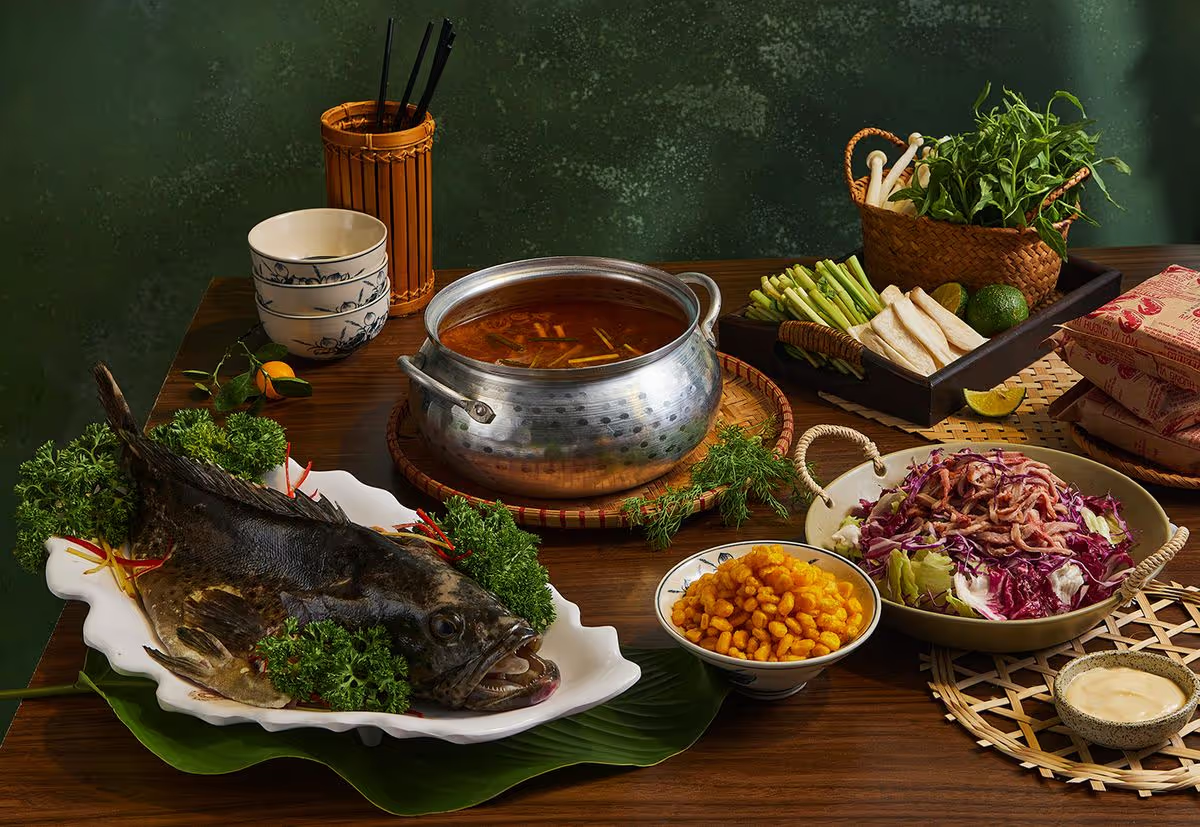
How Vietnamese cuisine absorbed colonialism, and made it Vietnamese
Vietnamese food is not fusion.
It is absorption.
Fusion suggests equal partnership. Vietnamese cooking took French colonialism, Chinese influence, remnants of the Cham kingdoms, and turned them into something unmistakably Vietnamese, through technique, ingredient choice, and a philosophy of balance that shows up in every bowl.
It is not cultural appropriation reversed.
It is survival, refined into sophistication.
When you cannot expel an influence, you metabolise it. Vietnamese cuisine is what happens when occupation becomes an ingredient, and the kitchen refuses to surrender.
What follows is an exploration of how food holds cultural memory, through markets that function like community archives, street vendors who still cook the way their grandmothers cooked, and regional dishes that encode geography and history in flavour.
Food as living history.
Phở: French infrastructure, Vietnamese imagination
Phở emerged in early twentieth-century Hanoi, during French colonial rule. The timing is not accidental.
French demand for beef created an infrastructure that did not exist in the same way before, slaughterhouses, butchers, supply chains. Vietnamese cooks repurposed what colonials discarded, beef bones, simmering them for hours to draw out marrow and collagen.
The method echoes pot-au-feu, the French long-simmered beef broth.
But the transformation is Vietnamese.
Star anise, cinnamon, coriander seed, cardamom, charred ginger. Rice noodles instead of wheat. A table of herbs and condiments served separately, so the diner finishes the bowl to their own taste.
Northern phở and southern phở are not variations on a theme. They have different philosophies.
Hanoi phở is restrained, clear broth, minimal garnish, attention on the quality of beef and the cleanliness of the stock. Southern phở, shaped after the 1954 partition and the movement of people, is more generous, slightly sweeter, abundant herbs, bean sprouts, lime, chilli.
It mirrors deeper patterns.
The north tends towards subtlety and precision. The south leans into abundance, sweetness, and layering.
The best phở is rarely found in a restaurant dining room.
It is found at a stall that has been doing one thing, every morning, for decades.
Broth simmer for twelve to sixteen hours. Bones roasted first. Spices toasted separately, then added at specific moments. A vendor who can read clarity like a musician reads pitch.
And once you taste it, you understand why phở is not just a dish.
It is an argument.
That even the leftovers of the empire can be turned into something tender.
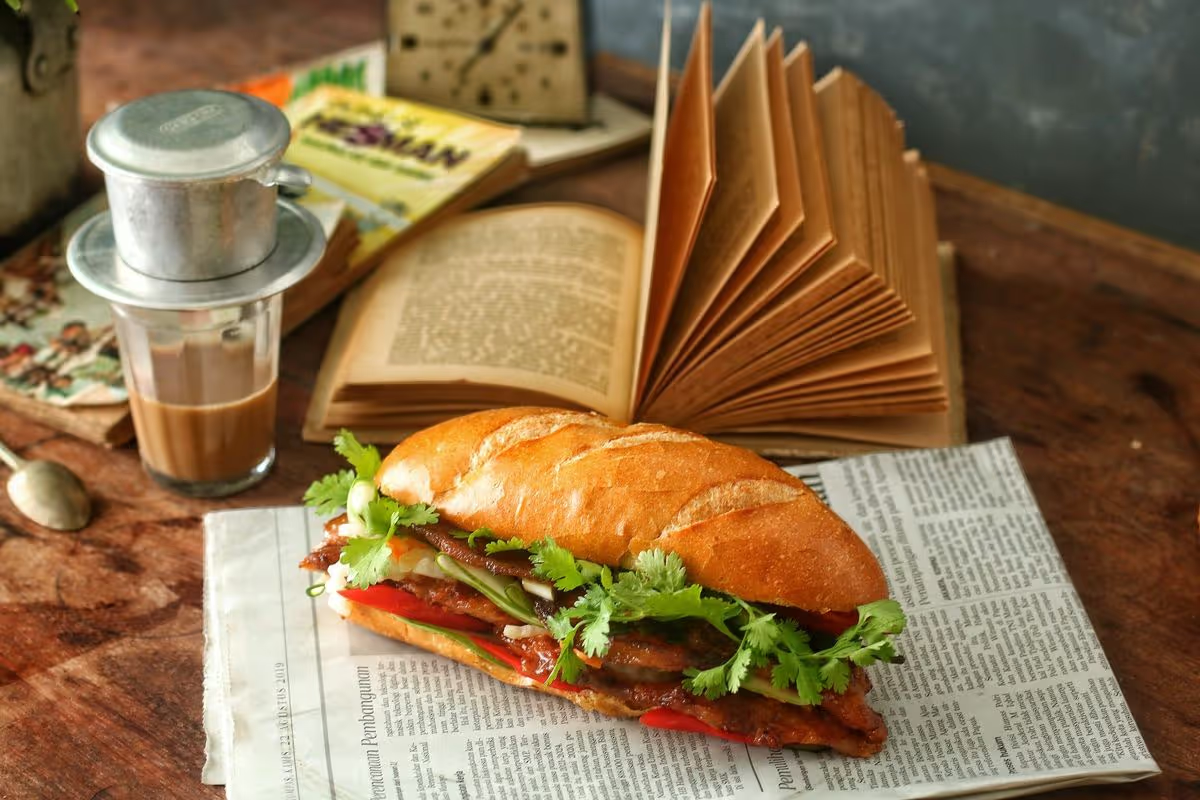
Bánh mì: colonial bread, Vietnamese architecture of flavour
Bánh mì exists because French colonials wanted baguettes in Vietnam.
They built bakeries, imported wheat, and trained Vietnamese bakers.
Then Vietnam did what it always does.
It adapted.
Bakers began cutting wheat flour with rice flour, creating bread that is lighter, airier, with a thinner, crispier crust. It was practical, rice flour was available and cheaper than imported wheat, but it was also aesthetic. The texture suits Vietnamese eating.
A French baguette is designed for butter and cheese.
A Vietnamese bánh mì is designed for contrast.
Fat, acid, heat, freshness.
Pâté and mayonnaise. Pickled daikon and carrot. Fresh coriander. Cucumber. Chilli. Then a protein, grilled pork, char siu, sardines, fried egg.
It should not work.
It works because Vietnamese cooking understands structure.
Every element has a job.
And the bread matters.
The best bánh mì is made with bread baked that morning. Stale bread does not absorb moisture correctly. The crust must crack, the crumb must give, the sandwich must hold together without becoming soggy.
A great vendor is not a sandwich shop.
It is a daily practice.
The same assembly, repeated until it becomes instinct.
Regional cuisines: geography, translated into taste
Vietnam is long and narrow, with climates that change dramatically from north to south. That geography created distinct regional cuisines.
The north, shaped by the Red River Delta and cooler seasons, tends towards restraint, less sugar, less oil, more emphasis on ingredient quality and clean flavour.
Central Vietnam, with Huế as its imperial heart, carries a double inheritance, court cuisine with its precision and presentation, and working-class food with its intensity and resourcefulness.
The south, fed by the Mekong Delta, leans into abundance, sweetness, and layering, influenced by tropical agriculture and nearby Cambodia and Thailand.
These are not marketing categories.
They are flavour differences rooted in climate, agriculture, and history.
Huế makes the point clearly.
Bún bò Huế, spicy beef noodle soup, uses lemongrass, shrimp paste, and a depth that feels nothing like northern phở. Bánh khoái, Huế’s crisp crepe, is smaller and tighter than southern bánh xèo, with its own ratios, sauces, and herb logic.
To eat across regions is to taste the map.
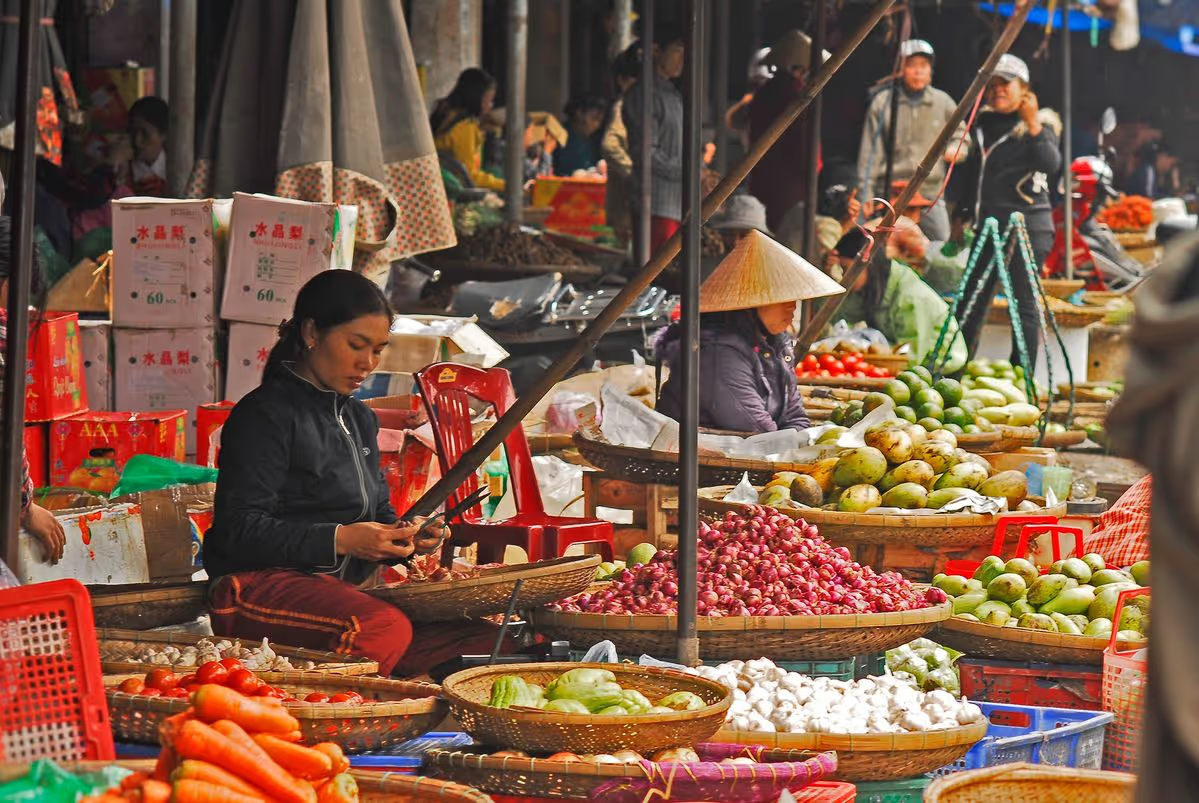
Markets as culinary archives
Vietnamese markets are not just places to shop.
They are living encyclopaedias.
If you want to understand Vietnamese cuisine, you need market literacy.
In Hanoi, markets reveal northern food culture through herbs alone. Multiple mints. Different basils. Sawtooth coriander. Fish mint. Rice paddy herb.
Each has a purpose.
Some are cooked. Some are served raw. Some belong with fish, some with pork, some with soup, some with grilled meat.
Vendors do not sell ingredients.
They sell knowledge.
Seasonality is visible too. Certain greens appear briefly, then disappear. Dishes change because the market changes. It is not romantic.
It is how food evolves when agriculture sets the terms.
In the south, markets carry a different energy.
Tropical fruit year-round. Coconuts in multiple stages. Seafood variety that reflects rivers and coast. Floating markets in the Mekong make the point even more literal, commerce conducted from boats, families living on water, ingredients moving with the current.
Street food as social infrastructure
Vietnamese street food is not a cheap alternative to restaurants.
It is social infrastructure.
It feeds working people. It employs families. It creates public space where community happens.
Street vendors often specialise in one dish.
That specialisation is the secret.
A woman selling bún chả has probably made it the same way for decades, reading charcoal heat without thinking, grilling meat to a texture her regulars expect, keeping broth consistent day after day.
Consistency matters more than novelty.
The vendor remembers how you like your bowl. Adjusts without asking. That relationship is part of the flavour.
To treat street food as “local colour” is to miss what it really is.
A system.
.avif)
Coffee: French legacy, Vietnamese patience
France introduced coffee to Vietnam in the nineteenth century, along with plantations in the Central Highlands.
Vietnam turned it into its own ritual.
Robusta beans. Darker roasts. Condensed milk instead of fresh cream, partly taste, partly history, refrigeration was not always available.
Cà phê sữa đá is the clearest example.
Strong coffee drips slowly through a metal filter, then meets condensed milk and ice. It is built for heat, and for waiting.
You watch it drip.
You do not rush it.
Egg coffee, cà phê trứng, is even more Vietnamese in its origin story.
Invented in 1940s Hanoi when milk was scarce, egg yolk whisked with sugar and condensed milk becomes a foam that sits on top of strong coffee. It is scarcity turned into craft.
Vietnamese cafés are not productivity zones.
They are places to sit. To talk. To watch the street.
To let time behave like time.
Why Vietnamese cuisine matters beyond tourism
Vietnamese food preservation is not museum curation.
It is daily practice.
The cuisine survived colonialism, war, partition, reunification, and economic transformation by remaining essential to ordinary life rather than becoming heritage performance.
That creates a rare truth for travellers.
The “authentic” experiences are not staged.
They are simply Vietnamese people cooking, shopping, and eating the way they have always done, with the same quiet intelligence, the same attention to balance.
To understand Vietnamese cuisine is to recognise it as a cultural memory system.
Recipes encode history. Techniques preserve knowledge that cannot be fully written down. Markets hold ingredient wisdom passed through generations.
You are not just eating phở.
You are tasting how a country took the structures of an empire and made them serve a different purpose.
You are not just buying a bánh mì.
You are watching how Vietnamese flavour architecture turns a colonial loaf into something that belongs entirely to the street.
And you begin to see why the best meals are often on plastic stools, under fluorescent light, from a vendor who has made the same dish for forty years.
Because what you are tasting is not a novelty.
It is continuity.
For customised culinary itineraries in Vietnam:
manish@unhotel.in
.avif)
.avif)
.avif)
Subscribe to stay inspired.
Stories, ideas, and slow journeys - from hidden villages to distant valleys, straight to your inbox.
.avif)