

Beyond the Postcards
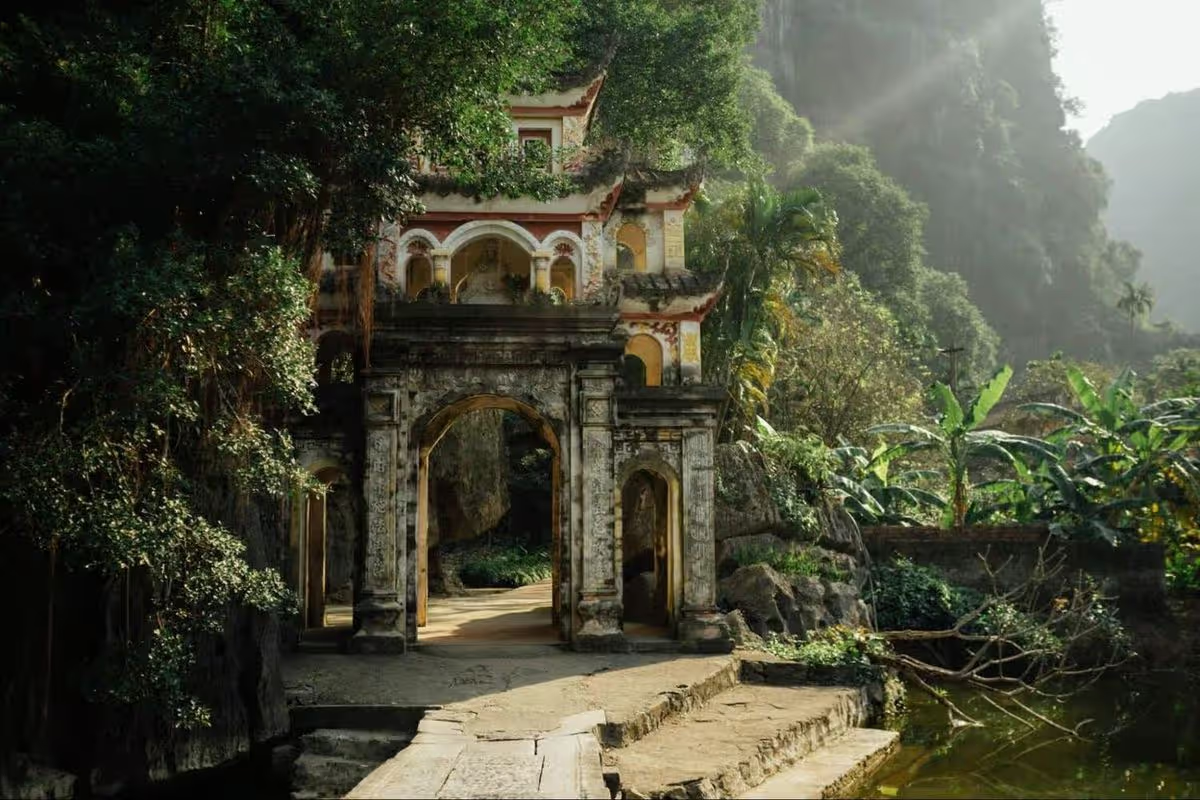
From the floating markets of Cai Rang to national parks like Pu Long reveal a quieter side of Vietnam , where wetland landscapes shelter rich wildlife and everyday river life continues largely untouched by mass tourism.

The Vietnam most tourists never see, and why it matters
Most Vietnam itineraries follow the same circuit, Hà Nội’s Old Quarter (historic central district), Hạ Long Bay (limestone bay cruise), Hội An’s Ancient Town (UNESCO old town), Ho Chi Minh City’s tourist zones.
It’s efficient travel.
Highlights. Iconic photos. Boxes ticked.
It can also leave you with a shallow understanding, minimal local interaction, and the nagging sense you’ve seen Vietnam’s stage set rather than Vietnam itself.
The Vietnam worth discovering exists elsewhere.
Northern valleys where tourism arrived quietly. Craft workshops run by families who still care about technique. Forests where animals live wild, not for selfies. Coastal towns where fishing is still the main economy. Markets that exist for Vietnamese customers, not visitors.
Accessing this Vietnam requires going slower, smaller, deeper.
Fewer places explored properly rather than many places visited briefly. Smaller groups that can fit into real life. Longer stays that allow conversation, not just proof-of-presence.
This isn’t about virtue.
It’s about finding Vietnam interesting rather than merely photogenic.
This is travel as discovery.
Northern mountain valleys: where tourism arrived quietly
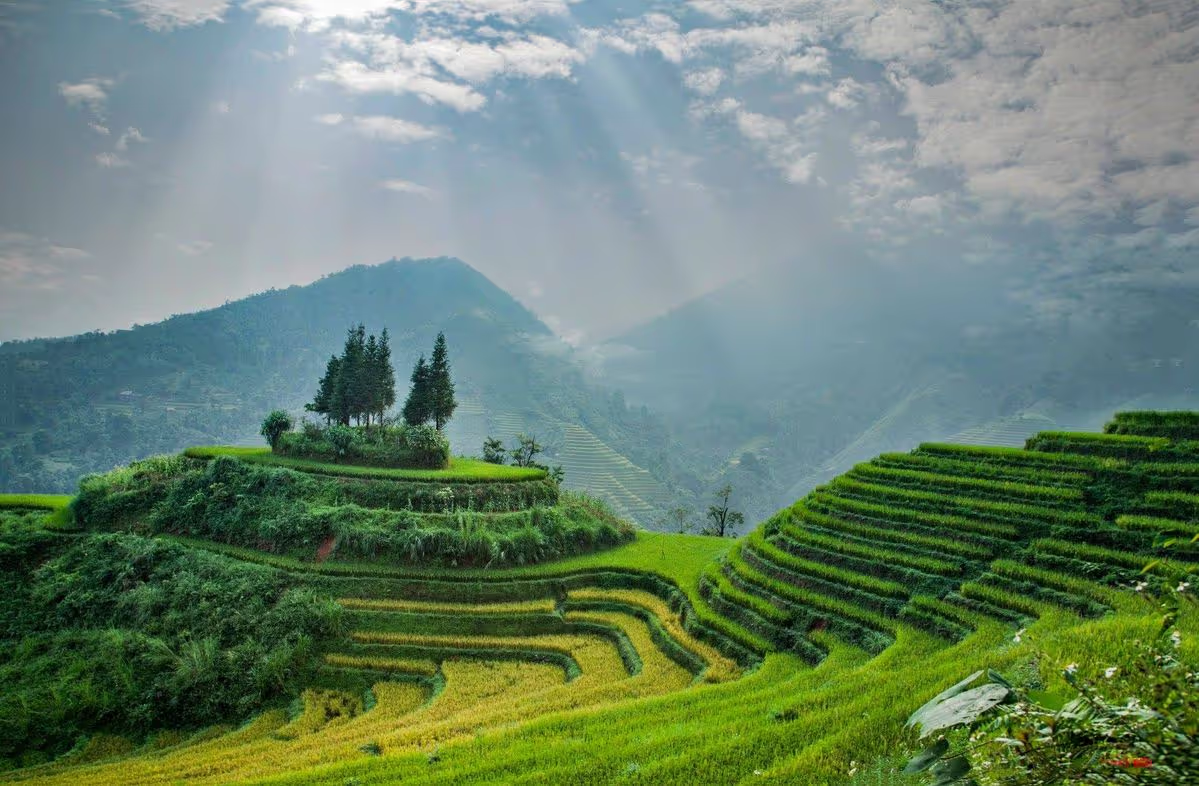
Pù Luông Nature Reserve (limestone forest reserve) sits about 150 kilometres south-west of Hà Nội (Vietnam’s capital).
Karsts rise from terraced rice fields. Water wheels (noria irrigation wheels) turn steadily beside the paddies. Thai ethnic minority villages (Tai-speaking communities) sit on valley floors and mountain slopes.
What makes Pù Luông interesting isn’t only the landscape.
It’s that daily life still runs on its own rhythm.
Farmers work the terraces. Women weave textiles. Water buffalo plough fields. Animist practices (spirit-based traditions) sit alongside Buddhism.
Tourism exists, but it hasn’t become the dominant economy.
Staying in family-run guesthouses, actual homes where families host travellers, gives you access to that continuity.
You’re not performing cultural exchange in a staged setting.
You’re observing, and sometimes participating in, ordinary life, rice planting in season, weaving, and meal preparation with ingredients from gardens and local markets.
It does require adjusting expectations.
Accommodation can be basic. Shared bathrooms. Limited cooling. Home-cooked food that may be unfamiliar. Language gaps.
These aren’t problems.
They’re the conditions that make real interaction possible.
Mai Châu Valley (northern rural valley) operates similarly, Thai villages, cycling through rice fields, stilt-house stays.
Hà Giang Province (far-north mountains) is even less touristed, high passes, weekly markets, landscapes that still feel genuinely remote.
When we design trips into these regions, the logic is simple.
Keep groups small. Book ahead to respect family schedules. Stay flexible around agricultural cycles. Accept that not everything is Instagram-ready.
Craft workshops: watching skill up close
Vietnamese craft traditions, silk weaving, ceramics, lacquerware, silverwork, are built on apprenticeship.
Years of repetition.
You can’t learn them in an afternoon.
But you can understand why they’re difficult, watch masters work, try a basic step yourself, and leave with a different kind of respect.
Bát Tràng (ceramics village, Hanoi) has produced pottery for centuries.
Tourist shops sell plenty of mass-produced pieces.
But family workshops still make work that requires real skill.
In a working studio, you see how many things can go wrong.
Clay preparation. Wheel throwing. Glazing. Kiln firing.
Each step is unforgiving.
Try it yourself and you feel the gap immediately.
The clay won’t centre. Your bowl walls wobble. Trimming takes a touch you don’t have yet.
Masters make it look effortless because they’ve done it daily for decades.
Vạn Phúc (silk weaving village) has woven silk for generations. Watching a loom in motion, shuttles flying, patterns emerging, hands moving faster than your eyes can track, makes it clear this isn’t “heritage” as decoration.
It’s work.
Hà Thái (lacquer craft village) is another lesson in patience.
Traditional lacquer involves many steps, coating, sanding, inlay, layering, polishing. Rushed work flakes. Proper work takes time.
These visits are not shopping trips disguised as culture.
They’re a way to understand why quality costs what it does.
If you choose to buy, you buy with context, not comparison to factory alternatives.
Wild forests: where animals actually live
Vietnam’s forests hold serious biodiversity.
But most tourists never see wild animals because they visit captive facilities marketed as “conservation”, or take short walks through disturbed forest.
Cúc Phương National Park (oldest national park) shows the difference.
This is real jungle, multi-canopy forest, humidity, insects, birdsong.
You might hear primates before you see them.
You might see nothing dramatic at all.
That’s the point.
Wildlife avoids humans.
The Endangered Primate Rescue Centre (rehabilitation facility) works with animals confiscated from illegal trade. Some are rehabilitated and released. Some cannot be.
You learn what conservation actually looks like, slow, underfunded, and necessary.
Cát Tiên National Park (southern lowland forest) offers another kind of patience.
Gibbons are often heard more than spotted. Night safaris reveal nocturnal life. The experience is less “interactive”, more honest.
Ba Bể National Park (mountain lake park) combines forest walks with lake exploration, limestone landscapes, caves, waterfalls. Wildlife sightings are uncertain, but the ecosystem is visible if you pay attention.
These are not zoo visits.
You’re observing systems, not demanding animals on cue.
.avif)
Where to stay: properties with roots
Vietnam’s accommodation ranges from international chains to places with deep local connection, family-run guesthouses, locally built eco-lodges, small boutique hotels run by people from the region.
The difference changes the trip.
Chains offer predictable comfort.
Locally rooted places offer context.
Staff who know the area. Food sourced nearby. Owners who can recommend experiences you won’t find through a quick search.
In Ninh Bình (limestone countryside), staying near Tam Cốc (river caves area) puts you close to rice paddies, caves, and pagodas, places that feel different at dawn, before day-trippers arrive.
In Pù Luông, some eco-lodges combine privacy and comfort with local staffing and building styles. Not a homestay, but not a generic resort either.
In Hội An, the best boutique stays inside real architecture, restored merchant houses, old trading buildings, colonial-era structures, maintained with care rather than themed decoration.
In Hà Giang, homestays in ethnic minority villages are basic, but the access is extraordinary.
When you choose accommodation for roots rather than star ratings, you don’t just sleep better.
You understand more.
Markets: where Vietnam actually shops
Vietnam’s markets divide cleanly.
Tourist markets sell what tourists expect.
Working markets sell what Vietnamese people need.
The second category is far more interesting.
Quảng Bá flower market (night flower wholesale) runs from midnight into dawn. Motorbikes arrive stacked with blooms. Traders negotiate quickly. Restaurants and hotels buy for the day.
Long Biên Market (wholesale produce hub) is part of Hà Nội’s food supply system, with tonnes of fruit and vegetables moving through narrow lanes before sunrise.
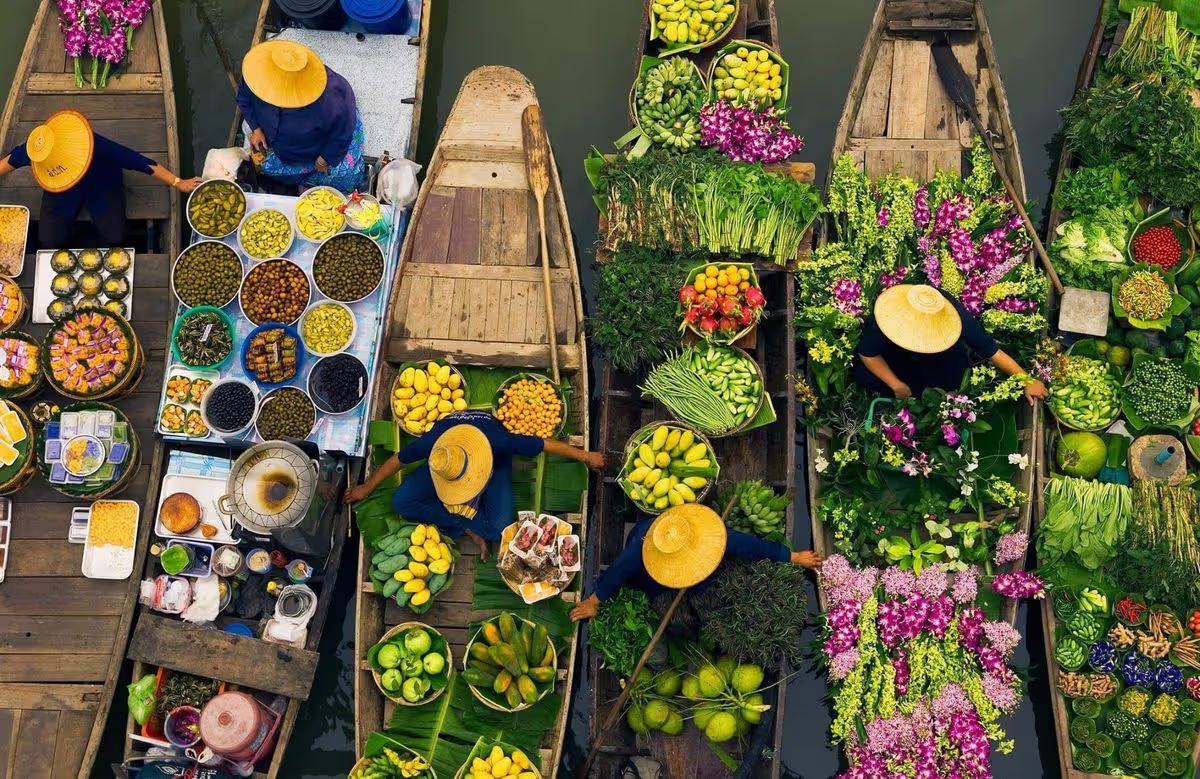
In the Mekong Delta (southern river region), floating markets still exist as commerce.
Cái Răng (floating wholesale market) near Cần Thơ (delta city) is best seen early, when trade is real and tourist boats are still rare.
In the far north, weekly markets in places like Bắc Hà (highland market town), Đồng Văn (karst plateau town), and Mèo Vạc (mountain market) serve ethnic minority communities, Hmong, Dao, Tày (highland groups) trading livestock, textiles, tools, produce.
If you visit working markets, the approach matters.
You’re observing, not extracting.
Ask before photographing. Accept refusals. Don’t turn people into content.
The goal is to see how a place functions.
Why depth matters
Vietnam rewards travellers who go slower, smaller, deeper.
Mountain valleys where families still host travellers in real homes. Workshops where masters keep technique alive. Forests that demand patience. Markets that reveal how cities and regions actually work. Properties run by people who belong to the place.
None of this requires a sustainability lecture.
It’s simply choosing experiences that connect you to actual Vietnam, not just its tourism infrastructure.
There are trade-offs.
Fewer destinations. Basic comfort in remote areas. Physical effort. Weather that changes plans. Language barriers.
The reward is a different kind of memory.
Not just what you saw, but what you understood.
This is Vietnam worth discovering.
Not because it’s virtuous.
Because it’s interesting.
For itineraries exploring Vietnam’s depth:
manish@unhotel.in
.avif)
.avif)
Subscribe to stay inspired.
Stories, ideas, and slow journeys - from hidden villages to distant valleys, straight to your inbox.
.avif)